
Renewable Energy and the Eco-Friendly Future
Discover how renewable energy is powering an eco-friendly future through solar, wind, and clean technologies that reduce emissions and create a more sustainable world.
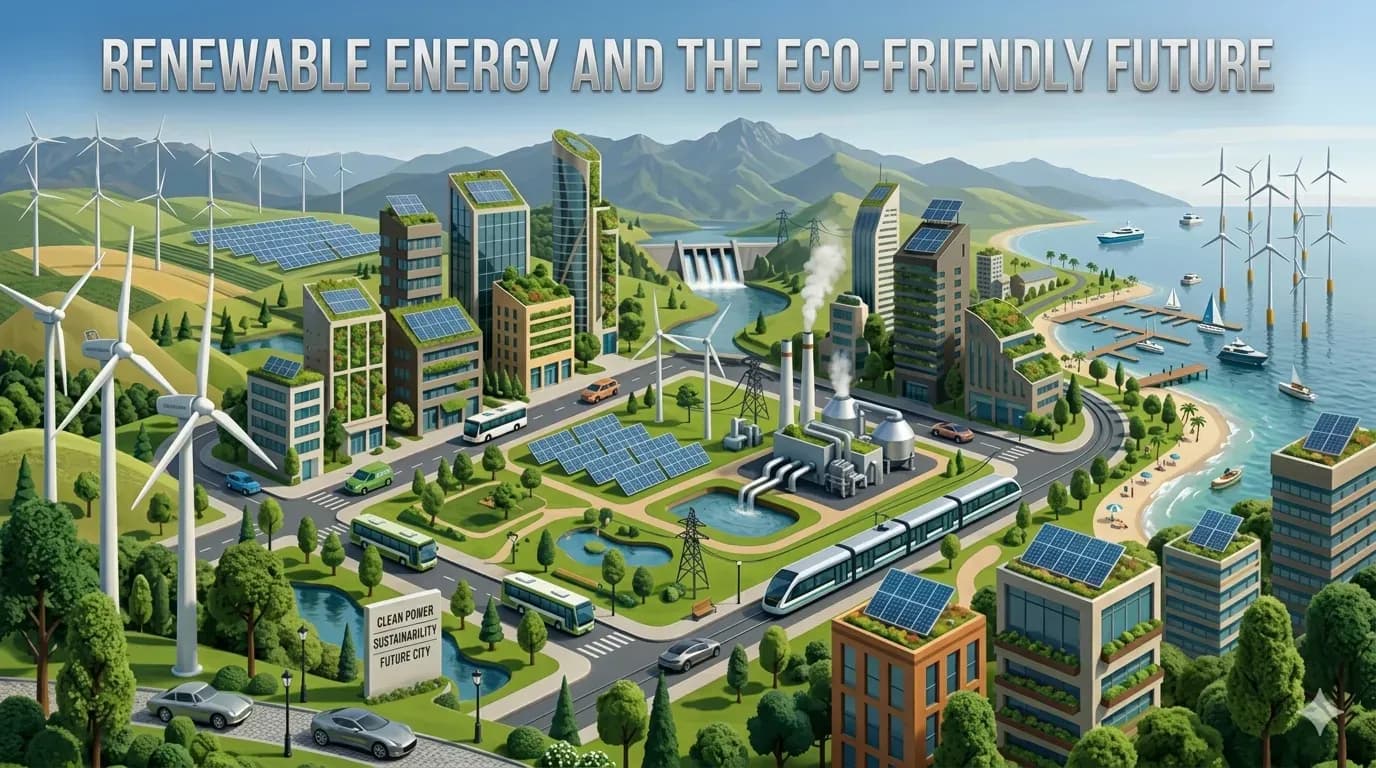
Stand outside on a clear morning. Feel the sunlight on your skin. Watch the wind move through the trees. That same sunlight and wind are now powering millions of homes, schools, hospitals, and factories across the world, without burning a single drop of oil or a single lump of coal.
We are living through one of the most important shifts in human history. The world is moving away from energy sources that took millions of years to form and that release centuries' worth of stored carbon when burned. We are moving toward energy sources that nature replenishes every single day.
This shift matters because the consequences of staying on the old path are no longer theoretical. Average global temperatures have already risen by more than 1.1 degrees Celsius above Pre-industrial levels. Sea levels are rising. Extreme weather events are becoming more frequent and more destructive. Ecosystems that took thousands of years to develop are disappearing within decades.
But this is not a guide about problems. It is a guide about solutions. Renewable energy and Eco-friendly technology are already working. They are already cheaper in many cases than the fossil fuels they replace. And they are already creating jobs, reducing pollution, and improving lives in every part of the world.
This article covers everything you need to know, from the basics of what renewable energy is and how it works to the real-world examples that show it in action to the honest challenges that still need to be solved.
What Is Renewable Energy?
Renewable energy comes from natural sources that refill themselves continuously. Unlike coal, oil, and natural gas, which took hundreds of millions of years to form and release carbon dioxide when burned, renewable sources are available every day and produce little or no pollution during operation.
The most important renewable energy sources are sunlight, wind, flowing water, heat from the Earth's interior, and organic material from plants and animals; none of these run out. None of them releases the greenhouse gases that drive climate change. And all of them are becoming cheaper and more accessible every year.
Experience-based insight: Many people assume renewable energy is something governments and large corporations deal with, not ordinary households. In reality, millions of families around the world now generate their own electricity at home using rooftop solar panels, often at a lower cost than buying power from the grid. The technology has become that accessible. |
Why is renewable energy different from fossil fuels?
Fossil fuels store energy that was captured from sunlight millions of years ago by ancient plants and organisms. When we burn them, we release that stored carbon into the atmosphere all at once. Renewable energy, by contrast, uses the energy that nature is producing right now. Sunlight falls on a solar panel today. Wind blows through a turbine today. The carbon cycle stays in balance.
This is the fundamental reason why the shift to renewable energy matters so much for climate change. It is not just about reducing pollution from tailpipes and chimneys. It is about stopping the release of ancient carbon that the atmosphere has not had to absorb for millions of years.
The Main Sources of Renewable Energy
Each renewable energy source works differently, has different strengths, and suits different environments. Understanding them individually helps you appreciate how they work together to create a reliable, clean energy system.
Solar Energy
Solar energy converts sunlight into electricity using photovoltaic (PV) cells, which are the panels you see on rooftops and in large desert installations. When photons from the sun strike the silicon cells in a panel, they knock electrons loose and create an electric current. This process produces no noise, no emissions, and no moving parts that can wear out.
Solar power has grown faster than almost any other energy technology in history. In 2010, a solar panel cost roughly 77 cents per watt of capacity. By 2024, that cost had fallen to around 7 cents per watt. This 90 percent price reduction in 14 years made solar the cheapest source of new electricity generation in most of the world.
Real-world example: A homeowner in Lahore installs 10 rooftop solar panels in 2024. The system costs the equivalent of roughly 18 months of electricity bills. After that payback period, the household generates free electricity for another 20 to 25 years. The panels also increase the home's value and protect the family from rising electricity prices. |
Beyond rooftops, utility-scale solar farms are now the fastest-growing source of new power generation globally. The Bhadla Solar Park in India covers 56 square kilometers and generates 2,245 megawatts of electricity, enough to power millions of homes. The Mohammed bin Rashid Al Maktoum Solar Park in Dubai is on track to become one of the largest in the world.
Wind Energy
Wind turbines capture the kinetic energy of moving air. As wind pushes the blades of a turbine, the rotating shaft drives a generator that produces electricity. Modern turbines are engineering marvels, standing over 150 meters tall with blades longer than the wingspan of a jumbo jet.
Onshore wind is now one of the cheapest sources of electricity available. Offshore wind, built in the sea where winds are stronger and more consistent, costs more to install but delivers more power per turbine and avoids competition for land. The Hornsea Two wind farm off the coast of England stretches across 462 square kilometers of the North Sea and powers around 1.4 million homes.
Wind power is particularly well-suited to countries with long coastlines, open plains, or high mountain passes. Pakistan, for example, has significant wind energy potential along its southern coastline near Karachi and in the Sindh corridor, where wind speeds are consistently strong enough for large-scale generation.
Hydro power
Hydro power, which generates electricity from flowing or falling water, is the oldest and largest source of renewable electricity worldwide. Dams capture the potential energy of water stored at a height. When the water flows through turbines at the base of the dam, it generates electricity. Run-of-river systems work without large reservoirs by diverting a portion of a river through a turbine channel.
Hydro power currently supplies about 16 percent of global electricity. Its greatest advantage is reliability. Unlike solar and wind, which depend on weather conditions, a reservoir-based hydro power plant can generate electricity on demand, day or night, in any weather. This makes it extremely valuable as a backup for other renewable sources.
The challenge with large dams is that they can displace communities, flood ecosystems, and alter river systems in ways that affect fish populations and downstream water supplies. Smaller, run-of-river systems avoid many of these problems and are growing in popularity as a more environmentally sensitive option.
Geothermal Energy
Deep beneath the Earth's surface, the planet's interior generates intense heat from the decay of radioactive elements. In some locations, this heat comes close enough to the surface to be captured and used to generate electricity or heat buildings directly.
Iceland gets more than 60 percent of its primary energy from geothermal sources. Geothermal power plants pump hot water or steam from underground reservoirs, run it through turbines, and reinject the cooled water back into the Earth. The process is clean, continuous, and produces power 24 hours a day, regardless of the weather.
Geothermal energy is limited by geography. It works best in tectonically active regions like Iceland, New Zealand, Kenya, and parts of the United States. However, advances in deep geothermal drilling technology may soon make it viable in a much wider range of locations.
Biomass and Bioenergy
Biomass energy converts organic material into heat, electricity, or liquid fuels. This includes crop residues, wood chips, food waste, animal waste, and dedicated energy crops like switch grass and biomass crops.
When managed sustainably, biomass energy can be close to carbon neutral. The carbon released during combustion is roughly equal to the carbon the plants absorbed from the atmosphere while growing. Advanced bio energy systems that also capture the carbon they produce, a process called bio energy with carbon capture and storage (BECCS), could actually remove carbon from the atmosphere while generating electricity.
Biomass is particularly important for industries and processes that are difficult to electrify directly, such as cement manufacturing, steel production, and long-haul aviation. Sustainable aviation fuel (SAF) made from waste biomass is already being used by major airlines.
Energy Source | Key Fact |
|---|---|
Solar Power | Cheapest new electricity source in most of the world as of 2024 |
Wind Power | Produces no water consumption and minimal land disruption |
Hydro power | Most reliable renewable source; generates on demand, day or night |
Geothermal | Runs 24/7 with no fuel cost; limited to certain geographies |
Biomass | Flexible and storeable; works in sectors hard to electrify |
Tidal and Wave | Highly predictable; commercial-scale projects now operating in Europe |
Eco-Friendly Technology Beyond Energy
Renewable energy is the foundation of an Eco-friendly future, but it is only one piece. A truly sustainable world also needs cleaner transportation, smarter buildings, less wasteful agriculture, and a fundamentally different approach to how we make and dispose of things. Here is how technology is addressing each of these areas.
Electric Transportation
Transportation accounts for roughly 23 percent of global carbon dioxide emissions. Electric vehicles replace the internal combustion engine, which converts only about 20 percent of the fuel's energy into motion and wastes the rest as heat, with an electric motor that converts over 90 percent of its electrical energy into motion.
In 2024, more than 17 million electric cars were sold globally, representing over 20 percent of all new car sales. The charging network is expanding rapidly. Battery costs have fallen by more than 90 percent since 2010. And the range of available models now covers everything from small city cars to heavy-duty trucks and commercial vans.
Beyond passenger cars, electrification is transforming public transport. Cities in China, Europe, and South America are replacing diesel buses with electric ones. Electric ferries are operating in Norway. Electric aircraft for short-haul routes are in advanced testing. The entire system of moving people and goods is being redesigned around electricity.
Green Building Technology
Buildings consume nearly 40 percent of global energy, mostly for heating, cooling, lighting, and hot water. Green building technology attacks this consumption from multiple angles.
Better insulation, triple-glazed windows, and airtight construction dramatically reduce the energy a building needs in the first place. Heat pumps, which move heat from one place to another rather than generating it by burning fuel, provide heating and cooling at two to four times the efficiency of traditional systems. LED lighting uses 75 to 80 percent less electricity than incandescent bulbs. Smart building management systems optimize all of these automatically.
Passive house buildings, designed to be so well insulated and airtight that they need almost no active heating, have demonstrated that it is possible to keep a building comfortable through a cold winter using only the body heat of its occupants and small amounts of mechanical ventilation heat recovery. These buildings were once seen as experimental. They are now being built at scale in many European countries.
Sustainable Agriculture
Food production accounts for roughly 25 percent of global greenhouse gas emissions. When you include the conversion of forests and grasslands to farmland, the use of chemical fertilizers, and the transport and refrigeration of food. Sustainable agriculture technology aims to produce more food with far less environmental cost.
Precision agriculture uses GPS mapping, drone surveillance, soil sensors, and machine learning to apply water, fertilizer, and pesticides exactly where and when crops need them, reducing overuse by 20 to 50 percent in many applications. Vertical farming grows crops indoors under LED lights in stacked layers, using up to 95 percent less water than field agriculture and requiring no pesticides at all.
Plant-based proteins and lab-grown meat address the enormous environmental footprint of livestock. Producing a kilogram of beef requires roughly 15,000 liters of water and generates about 60 kilograms of carbon dioxide equivalent. A kilogram of plant-based protein requires a fraction of those resources.
Circular Economy and Waste Technology
The linear economy model, in which we extract resources, make products, use them, and throw them away, is fundamentally incompatible with a finite planet. The circular economy keeps materials in use for as long as possible, then recovers and regenerates them at the end of their service life.
Advanced recycling technologies use AI-powered sorting robots that can identify and separate different types of plastic, metal, and glass at speeds and accuracy levels far beyond what human workers can achieve. Chemical recycling breaks down plastics into their original molecular building blocks, which can then be used to make new plastics of equal quality. Composting and anaerobic digestion convert food and garden waste into soil nutrients and biogas.
Manufacturers are redesigning products to be easier to repair, disassemble, and recycle. The European Union's right-to-repair legislation now requires manufacturers to provide spare parts and repair information for a growing list of product categories. Companies like Patagonia and Fairphone have built their entire business models around durability, repairability, and material transparency.
Real-World Impact and Examples
Numbers and concepts are useful, but stories of what is actually happening on the ground bring the transition to life.
Costa Rica: Nearly 100 Percent Renewable Electricity
Costa Rica, a small Central American country of about 5 million people, has run its national electricity grid on over 98 percent renewable energy for most of the past decade. The country combines hydro power from its mountain rivers, wind farms on its highlands, geothermal plants on its volcanic slopes, and solar installations in its lowlands. The grid is reliable, affordable, and almost entirely free of carbon emissions. Costa Rica has also committed to becoming fully carbon neutral by 2050 across all sectors, not just electricity.
Germany: The Energiewende in Practice
Germany's Energiewende, which means energy transition, has been one of the most ambitious renewable energy programs ever attempted by an industrialized country. Germany has installed enough solar and wind capacity to generate more electricity than it consumes on many days of the year. In 2023, renewable sources provided about 59 percent of Germany's total electricity. The program has not been without challenges, including managing grid stability when wind and solar generate more power than the system can absorb, but it has demonstrated that a major industrial economy can fundamentally reshape its energy system.
Morocco: Powering Africa with Sun and Wind
Morocco has positioned itself as a clean energy leader in Africa and the Arab world. The Noor solar complex near Ouarzazate, built in the Sahara desert, uses concentrated solar power technology to generate electricity that continues even after the sun sets, using molten salt to store heat collected during the day. Morocco now exports electricity to Spain through an undersea cable, has become a major manufacturer of electric vehicle components, and has set a target of sourcing 52 percent of its electricity from renewable sources by 2030.
India: Solar for 1.4 Billion People
India has launched one of the most ambitious solar programs in the world. The government's target of 500 gigawatts of renewable capacity by 2030 is driving massive investment in solar parks, rooftop installations, and rural electrification projects. Programs like PM-KUSUM bring solar water pumps and small solar installations to farmers across the country, reducing diesel consumption and giving agricultural communities access to reliable, affordable energy for the first time.
From practical experience: When a village in Rajasthan received its first solar microgrid in 2022, the immediate effects went far beyond electricity. Children could study after dark. Health clinics could refrigerate vaccines. Women who had spent hours collecting firewood could redirect that time toward other work. Clean energy in a developing community does not just reduce emissions. It changes lives. |
Benefits of Renewable Energy and Eco-Friendly Technology
Environmental Benefits
Dramatically reduces carbon dioxide and methane emissions, slowing the pace of climate change.
Eliminates sulfur dioxide and nitrogen oxide pollution from fossil fuel combustion, reducing acid rain and smog.
Reduces water consumption. Coal and nuclear plants use enormous amounts of water for cooling. Most renewable sources use little or no.
Protects biodiversity by reducing habitat destruction from fossil fuel extraction and the ecological damage of air and water pollution.
Limits ocean warming, which threatens coral reefs and marine food chains, by reducing the amount of carbon dioxide absorbed by the oceans.
Economic Benefits
Creates more jobs per unit of energy produced than fossil fuels, with global renewable energy employment exceeding 13.7 million people in 2023.
Reduces national energy import bills, keeping money within the domestic economy.
Provides price stability, since the fuel for solar and wind is free, unlike oil and gas, which fluctuate dramatically with global markets.
Drives innovation in manufacturing, materials science, software, and grid management that spills over into other industries.
Opens new export markets for countries that develop strong renewable energy industries.
Health and Social Benefits
Cleaner air from reduced combustion saves millions of lives each year. The World Health Organization estimates that air pollution from fossil fuels causes approximately 3.6 million premature deaths annually.
Reducing water and soil contamination from mining and drilling protects drinking water and agricultural land.
Distributed renewable energy systems, such as rooftop solar and community wind projects, give communities energy independence and resilience.
Lower energy costs free up household income for food, education, and healthcare in lower-income communities.
Honest Challenges and How We Are Solving Them
A credible guide to renewable energy acknowledges the real difficulties, not just the successes. Here are the main challenges and the progress being made on each.
Intermittency: The Sun Does Not Always Shine, and the Wind Does Not Always Blow
This is the most frequently cited challenge with solar and wind energy, and it is a legitimate one. A solar panel generates nothing at night. A wind turbine stops when the air is calm. An electricity grid must always balance supply and demand in real time. How do you do that reliably with variable sources?
The answer is a combination of four approaches working together. First, battery storage systems capture surplus electricity when generation is high and release it when generation is low. Battery costs have fallen by about 90 percent since 2010 and continue to decline. Second, grid interconnection links regions with different weather patterns. When the wind is calm in one area, it may be strong in another. Third, demand response systems shift electricity use to times when renewable generation is high, such as charging electric vehicles during midday when solar output peaks. Fourth, a diverse mix of renewable sources, solar, wind, hydro, geothermal, and biomass, reduces dependence on any single one.
Upfront Cost
Installing solar panels, buying an electric vehicle, or retrofitting a home for energy efficiency requires a significant upfront investment. Even though the long-term savings often more than cover the initial cost, the barrier is real for many households and businesses.
Governments are addressing this through subsidies, tax credits, low-interest green loans, and leasing arrangements that allow households to access renewable technology with little or no upfront payment. In some markets, solar leasing programs let homeowners install panels for free in exchange for a monthly payment lower than their previous electricity bill.
Grid Infrastructure
Moving electricity from where it is generated, often in sunny or windy rural areas, to where it is consumed, mostly in cities, requires extensive grid infrastructure. Many existing grids were designed for large, centralized power plants and need to be upgraded to handle distributed, variable generation from thousands of small sources.
Grid modernization is underway in most major economies. Smart meters, grid sensors, automated switching systems, and advanced software are all being deployed to make grids more flexible and resilient. The United States, European Union, China, and India have all committed to major grid investment programs through 2030.
Realistic perspective: The transition to renewable energy is not going to happen overnight, and it is not going to be perfectly smooth. There will be moments when old systems and new systems run in parallel inefficiently, when costs in some sectors remain high, and when political resistance slows progress. But the direction is clear, the technology works, and the economics increasingly favor the transition. The question is not whether it happens, but how quickly. |
How Individuals Can Participate
You do not need to wait for governments or corporations to act. Individuals make choices every day that collectively shape the energy and environmental future. Here are the most effective things you can do, organized from the easiest and cheapest to the most significant.
Start Where You Are
Switch to LED lighting if you have not already. LED bulbs use 75 to 80 percent less electricity than incandescent bulbs and last 15 to 25 times longer. A typical home can save the equivalent of several hundred kilowatt-hours per year from this single change.
Install a programmable or smart thermostat. Heating and cooling account for the largest share of household energy use in most climates. A smart thermostat learns your schedule and reduces energy use when no one is home, saving 10 to 15 percent on heating and cooling bills with no loss of comfort.
Reduce food waste. About one-third of all food produced globally is wasted, and producing that food consumes enormous amounts of water, land, and energy. Buying only what you need, using leftovers, and composting what you cannot use are all meaningful reductions.
Choose public transport, cycling, or walking over driving a personal vehicle where possible. If you do drive, combining trips and maintaining your vehicle properly both reduce fuel consumption significantly.
Bigger Changes With Bigger Impact
If you own your home and your roof gets reasonable sunlight, investigate rooftop solar. In most markets, rooftop solar is now cost-competitive with grid electricity even without subsidies, and many systems pay for themselves within 6 to 10 years.
When replacing an appliance, vehicle, or heating system, choose the most energy-efficient option you can afford. An electric heat pump water heater uses two to three times less energy than a gas or electric resistance water heater. An induction cooktop is more efficient and produces no indoor air pollution compared to a gas cooktop.
Choose an electricity supplier that sources power from renewable sources, if your market offers this option. Many utilities now offer green tariffs that support renewable energy investment.
Support policies and politicians who prioritize the clean energy transition. Individual consumer choices matter, but policy changes at the national and local level multiply that impact enormously.
The Future of Renewable Energy
The next decade will be decisive for the clean energy transition. Several emerging technologies and trends are likely to define how it unfolds.
Green Hydrogen
Hydrogen produced by using renewable electricity to split water into hydrogen and oxygen, a process called electrolysis, creates a fuel that emits only water vapor when used. Green hydrogen can store large amounts of energy for long periods, making it valuable for balancing seasonal variations in renewable generation. It can also decarbonize heavy industry, shipping, aviation, and other sectors that are very difficult to electrify directly.
The cost of green hydrogen is falling rapidly as electrolyzer technology improves and renewable electricity becomes cheaper. Several countries, including Germany, Australia, Chile, and Saudi Arabia, are making major investments in green hydrogen production infrastructure with the goal of becoming exporters.
Offshore Wind and Floating Turbines
Offshore wind is growing faster than almost any other energy technology. Floating offshore wind turbines, which are tethered to the sea floor by cables rather than fixed to it by rigid foundations, can be deployed in much deeper water. This opens up enormous areas of ocean, including the waters off the coasts of Japan, South Korea, the United States West Coast, and many other countries, to wind energy development.
Next-Generation Solar
Perovskite solar cells, which can be manufactured at a lower cost than conventional silicon cells and may achieve higher efficiency, are moving from laboratory to commercial scale. Bifacial solar panels capture sunlight from both sides. Building-integrated photovoltaics embed solar cells into roofing tiles, windows, and building facades. These advances continue to reduce the cost and expand the applications of solar energy.
Long-Duration Energy Storage
Lithium-ion batteries work well for storing 4 to 8 hours of electricity. But matching renewable energy supply with demand over days, weeks, or seasons requires longer-duration storage. Iron-air batteries, flow batteries, compressed air storage, pumped hydro power, and thermal storage in materials like molten salt and gravel are all being developed and deployed to fill this gap.
AI and Smart Grids
Artificial intelligence is beginning to manage electricity grids with a precision that human operators cannot match. AI systems predict demand hours and days ahead, forecast renewable generation based on weather models, route power around outages and congestion, and optimize the charging of millions of electric vehicles to minimize grid stress. As the number of distributed energy sources grows, this kind of intelligent coordination becomes essential.
Conclusion
We are at a turning point. The technologies that can power a clean, prosperous, and sustainable civilization already exist. Solar panels, wind turbines, electric vehicles, heat pumps, advanced batteries, and smart grids are not experimental. They are deployed, at scale, in countries and communities around the world right now. The Eco-friendly future is not a sacrifice. It is a system that produces less pollution, more energy security, more jobs, lower long-term costs, and healthier communities. The countries and companies investing in it most aggressively today are the ones building competitive advantages that will last for decades. The remaining challenge is speed. Climate change does not pause while we debate policies or wait for costs to fall further. Every year of continued fossil fuel emissions adds more carbon to the atmosphere, which will affect temperatures for centuries. The urgency is real, but so is the progress. Global clean energy investment exceeded fossil fuel investment for the first time in 2023 and has continued to grow. Whether you are a student learning owner evaluating your energy options, or a policymaker trying to understand the landscape, the most important thing you can do is stay informed and take the next step that is available to you. The transition to renewable energy is the defining project of our generation. It is already underway. The question is how actively each of us chooses to be part of it. |
Frequently Asked Questions
Q: What is renewable energy in simple words?
Renewable energy comes from natural sources that are constantly replenished. Sunlight, wind, flowing water, and heat from inside the Earth are all examples. Unlike coal, oil, and gas, which took millions of years to form and release carbon when burned, renewable sources are available every day and produce very little pollution. They are the foundation of an Eco-friendly energy system.
Q: Is renewable energy really cheaper than fossil fuels now?
In most of the world, yes. New solar and wind power plants now generate electricity more cheaply than new coal or gas plants in most regions. The International Energy Agency reported in 2023 that solar power is the cheapest source of electricity in history. The cost of wind power has also fallen dramatically. Existing fossil fuel plants can sometimes still generate electricity at lower short-run cost because their construction costs have already been paid, but new renewable projects consistently beat new fossil fuel projects on price.
Q: Can renewable energy power an entire country reliably?
Yes, and several countries are already demonstrating this. Costa Rica generates over 98 percent of its electricity from renewable sources. Iceland generates nearly 100 percent of its power from geothermal and hydro power. Norway generates around 90 percent from hydro power. Larger, more industrially complex economies are following more slowly, but Germany, Denmark, and Portugal regularly run their grids at very high proportions of renewable energy for extended periods. A mix of different renewable sources combined with storage and smart grid management can maintain a reliable supply.
Q: What is the most Eco-friendly energy source?
All renewable energy sources have a much lower environmental footprint than fossil fuels, but they differ from each other. Solar and wind power have the smallest land footprint per unit of energy generated when considering their full life cycle. Hydro power is reliable but can significantly alter river ecosystems. Geothermal has essentially no fuel or emissions but is limited by geography. Biomass depends greatly on how it is sourced and managed. A combination of all of these, chosen to suit local conditions, is generally more sustainable than relying on any single source.
Q: How does renewable energy help fight climate change?
Burning fossil fuels releases carbon dioxide and methane that have been stored underground for millions of years, rapidly increasing the concentration of greenhouse gases in the atmosphere. These gases trap heat and cause global temperatures to rise. Renewable energy generates electricity without burning anything, so it does not add greenhouse gases to the atmosphere. Replacing fossil fuels with renewable energy across electricity generation, transport, heating, and industry is the single most important step the world can take to slow climate change.
Q: What can I do personally to support the Eco-friendly transition?
The most impactful individual actions are: choosing an electric vehicle or reducing personal driving, installing rooftop solar if you own a home, choosing a renewable electricity tariff, switching to an electric heat pump for heating and cooling, reducing meat consumption, particularly beef, reducing food waste, and supporting politicians and policies that accelerate the clean energy transition. You do not need to do all of these at once. Starting with one or two and building from there creates genuine impact over time.
Share this article
Related Articles
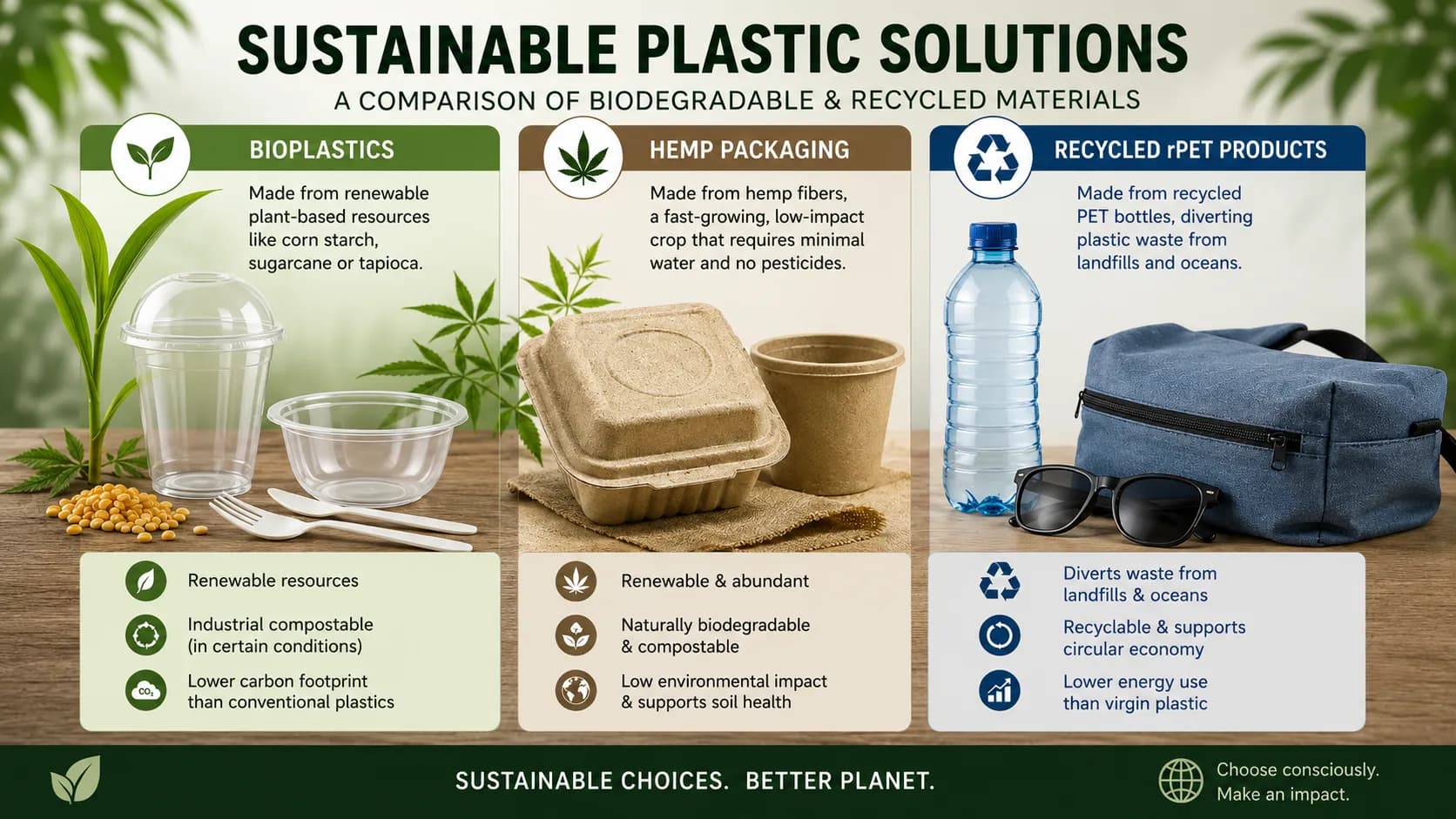
Eco-Friendly Plastic Alternatives and Sustainable Plastic Solutions That Actually Work
Explore eco-friendly plastic alternatives and sustainable solutions that reduce waste, improve sustainability, and help businesses move beyond traditional plastics.
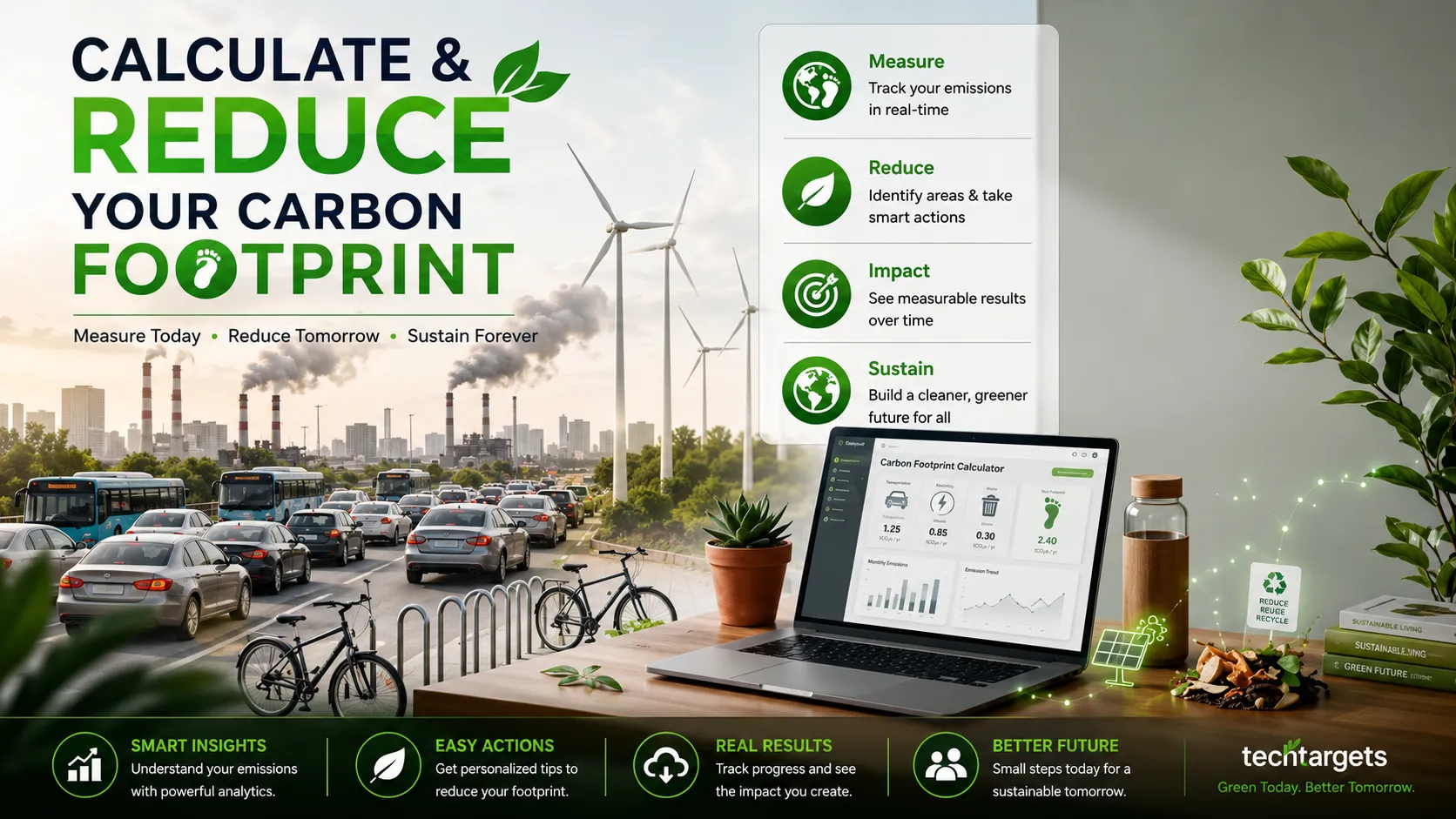
How to Calculate Your Carbon Footprint and Reduce It in 2026
Learn how to calculate your carbon footprint, identify the biggest sources of emissions, and take practical steps that actually reduce your environmental impact in daily life.
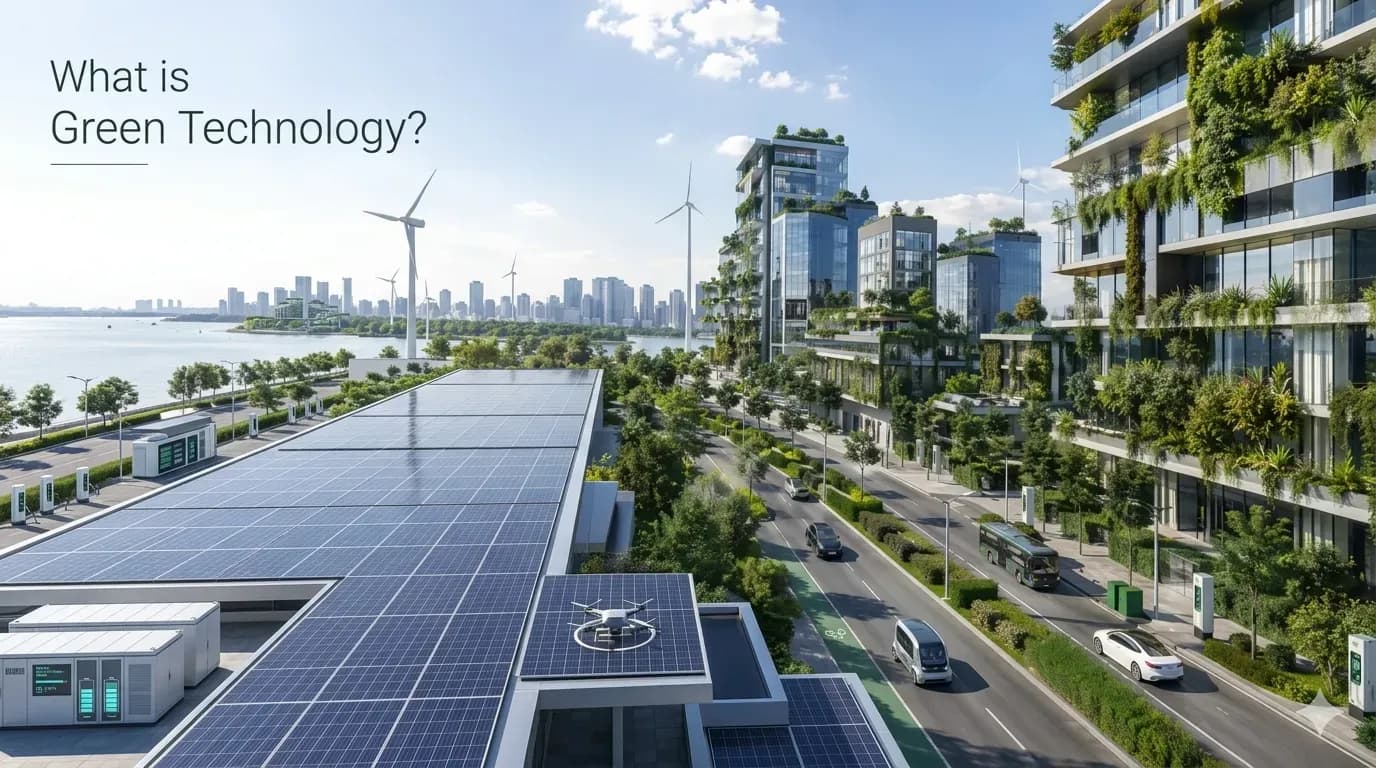
What is Green Technology? A Beginner's Guide to Clean Innovation and a Sustainable Future
Learn how green technology is creating a sustainable future through renewable energy, clean innovation, and eco-friendly solutions that reduce environmental impact.