
How to Calculate Your Carbon Footprint and Reduce It in 2026
Learn how to calculate your carbon footprint, identify the biggest sources of emissions, and take practical steps that actually reduce your environmental impact in daily life.
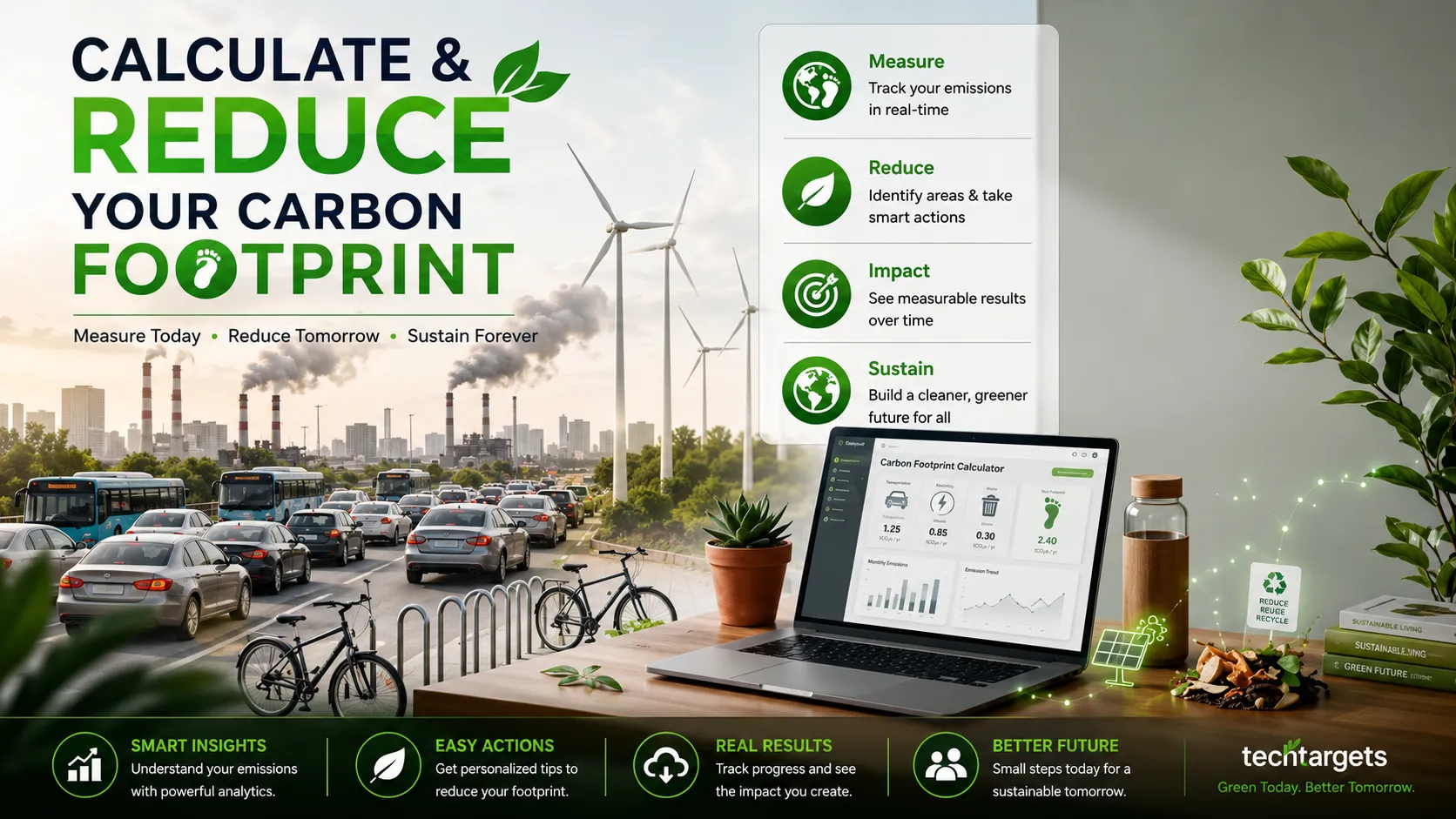
Your daily choices emit more carbon than you probably realize, and most people have no idea where to start. Learning how to calculate your carbon footprint is the first concrete step toward reducing it. Once you see the numbers, the path forward becomes surprisingly clear.
What Is a Carbon Footprint?
A carbon footprint is the total amount of greenhouse gases, mainly carbon dioxide (CO₂) and methane, that your activities produce, directly or indirectly. Researchers measure it in metric tons of CO₂-equivalent (tCO₂e) per year.
The average American generates about 16 metric tons of CO₂ per year, according to data from the U.S. Energy Information Administration. That figure is roughly four times the global average of 4 tons. Understanding this gap is why measurement matters.
Your footprint covers two main categories: your direct emissions (driving, home heating) and your indirect emissions (the goods you buy, the flights you take, the food you eat). Both categories matter, and you can reduce both.
Now that you know what a carbon footprint is, let's look at how to measure yours accurately.
How to Calculate Your Carbon Footprint: A Step-by-Step Breakdown
You don't need a science degree to measure your emissions. You need a few data points and the right tool. Here's exactly how to do it.
Gather Your Energy Bills
Pull your electricity and natural gas bills for the last 12 months. These numbers are the foundation of your home energy calculation. Most utility bills show your monthly kWh (kilowatt-hours) for electricity and therms or CCF for gas.
Tip from experience: if you can't find 12 months of bills, most utility providers let you download historical usage directly from your online account portal.
Track Your Transportation Habits
Transportation is typically the largest slice of a personal carbon footprint. You need to account for:
Annual miles driven by car (check your odometer or use a driving app log)
Your car's fuel type and approximate MPG
Number of flights per year (short-haul vs. long-haul matters differently)
Regular use of buses, trains, or rideshare services
A single round-trip flight from New York to Los Angeles generates roughly 0.6 to 1.0 metric tons of CO₂ per passenger, according to flight emissions calculators. That one trip can equal months of driving.
Estimate Your Diet's Impact
Food production accounts for about 26% of global greenhouse gas emissions, according to research from Our World in Data. Your personal diet has a measurable impact on that share.
A beef-heavy diet generates approximately 3.3 kg of CO₂ per day, compared with 2.5 kg for a vegetarian diet and 1.7 kg for a vegan diet. You don't need to go vegan; even cutting back on beef twice a week yields a meaningful reduction.
Account for Your Shopping and Consumer Habits
Every product you buy carries an embedded carbon cost called embodied emissions. Manufacturing a single smartphone produces roughly 70 kg of CO₂. New clothes, electronics, and furniture all add up faster than most people expect.
For a rough estimate, look at your annual discretionary spending. Carbon calculators typically apply an emissions factor per dollar spent by product category.
Use a Carbon Footprint Calculator
Once you have your data, feed it into a reliable carbon footprint calculator. Three well-regarded free options include:
EPA Household Carbon Footprint Calculator is straightforward, US-focused
CoolClimate Calculator (UC Berkeley) one of the most comprehensive tools available
Carbon Footprint Ltd Calculator is good for international users and includes flights
Each tool uses slightly different emissions factors, so your totals may vary by 10–15%. The goal is a realistic baseline, not a perfect number. Once you have your baseline, you're ready to act on it.
How to Measure Your Carbon Footprint and Reduce It Effectively
Measuring is only valuable if it leads to action. Here's how to translate your footprint into a targeted reduction plan without overhauling your entire life at once.
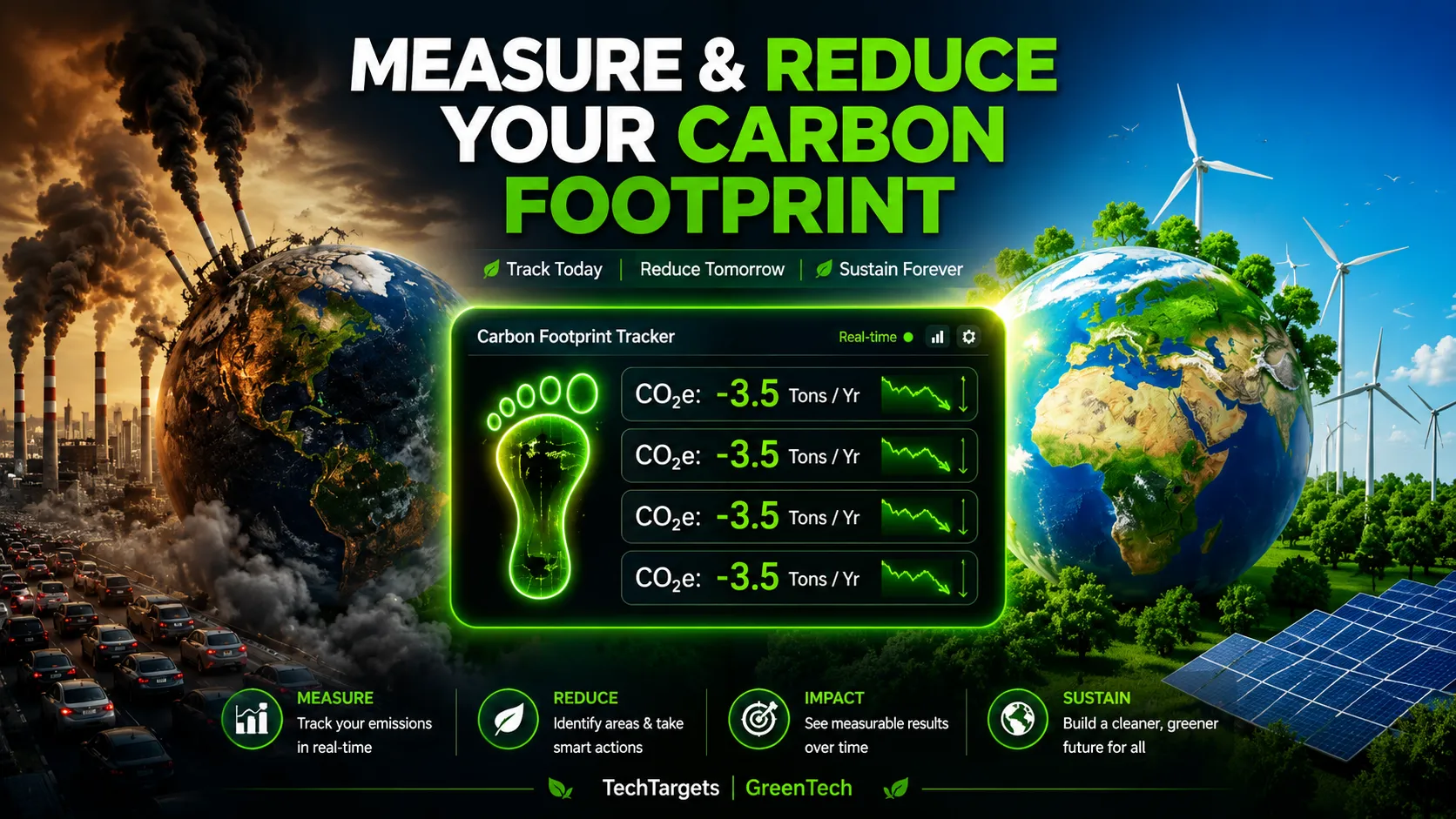
Prioritize Your Biggest Categories First
After you calculate your footprint, identify which category contributes the most. For most Americans, transportation and home energy together account for over 50% of personal emissions. Start there.
Don't scatter your energy across minor changes. Switching from incandescent bulbs to LEDs saves roughly 0.08 metric tons per year. Switching from a gas-powered car to an electric vehicle saves up to 2.5 metric tons annually. The math tells you where to focus.
Set a Specific Reduction Goal
Climate scientists suggest individuals need to reach 2–3 metric tons of CO₂e per year by 2050 to align with Paris Agreement targets. If you're currently at 16 tons, a realistic short-term goal might be reducing by 2 tons in year one.
Break that annual goal into quarterly milestones. Tracking progress every three months keeps you motivated and reveals which changes are actually working.
High-Impact Actions That Move the Needle
Based on research from Project Drawdown and similar organizations, these actions carry the highest per-person CO₂ reduction potential:
Switch to renewable electricity (or install solar panels): Saves 1.5–3 tons/year
Drive less or switch to an EV: Saves 1–2.5 tons/year
Eat less red meat (especially beef): Saves 0.5–1.5 tons/year
Take one fewer long-haul flight: Saves 0.5–2.5 tons/year
Improve home insulation and air sealing: Saves 0.5–1 ton/year
Notice that lifestyle changes can save far more carbon annually than product swaps. Buying a reusable bag is good, but flying less is transformative. Focus your effort where the leverage is highest.
How to Reduce Your Carbon Footprint at Home
Your home is one of the most actionable areas for carbon reduction, and many changes also reduce your energy bills.
Home Energy Efficiency Wins
Start with a home energy audit. Many utility companies offer them free or at a low cost. An audit identifies where your home loses heat or cooling and which appliances consume the most energy.
The most impactful home changes include:
Thermostat optimization: Setting it 7–10°F lower for 8 hours per day saves up to 10% on annual heating and cooling bills
Water heater insulation: Wrapping an older tank water heater with an insulation blanket can reduce standby heat loss by 25–45%
Air sealing: Caulking and weatherstripping around doors and windows prevent drafts that silently drain energy
LED lighting: Uses 75% less energy than incandescent bulbs and lasts 25 times longer
These home changes compound. A household that implements all four steps above can realistically reduce its home energy footprint by 20–30% in the first year.
Renewable Energy Options for Your Home
If you can't install solar panels, many utilities now offer green tariff programs or renewable energy certificates (RECs). These programs let you pay a small premium to match your electricity use with renewable generation on the grid.
Installing solar panels is a larger upfront investment, but federal tax credits (currently 30% of the installation cost in the US) dramatically reduce the payback period.
Once you've addressed your home emissions, the next high-leverage area is transportation.
Reducing Your Transportation Carbon Footprint
Transportation emissions are largely about fuel burned per mile and miles traveled. You can attack both variables.
Driving Less and Smarter
Combining errands into single trips, carpooling, and choosing routes that avoid stop-and-go traffic all reduce fuel consumption without requiring a new vehicle. Proper tire inflation alone improves fuel economy by up to 3%, according to the US Department of Energy.
Remote work, even two days per week, can cut your commuting emissions by 40%. If you have any flexibility on this front, it's worth treating as a carbon-reduction strategy.
Transitioning to Cleaner Vehicles
If your next vehicle purchase is a few years out, plan now. Plug-in hybrid electric vehicles (PHEVs) offer a practical middle ground: they run on electricity for short trips and use gasoline for longer ones. A full battery electric vehicle (BEV) charged on a renewable-heavy grid produces near-zero operational emissions.
Public transit, cycling, and e-bikes also deserve consideration. Replacing one car trip per day with a bike or bus trip saves approximately 0.5 to 1 kg of CO₂ per mile avoided, depending on the transit mode and local grid mix.
Carbon Offsets: A Useful Tool, Not a Substitute
After you've made direct reductions, carbon offsets let you compensate for emissions you can't yet eliminate. You pay for verified projects, reforestation, methane capture, and clean cookstoves that reduce CO₂ elsewhere.
The keyword is 'verified.' Look for offsets certified by Gold Standard or Verified Carbon Standard (VCS). Avoid unnamed or uncertified offset programs that lack independent verification.
Treat offsets as a supplement to reductions, not a replacement. Offsetting without reducing is like mopping the floor while leaving the tap running. Reduce first; offset the remainder.
Your Action Plan
Knowing how to calculate your carbon footprint turns a vague concern into a concrete problem you can solve. The process is straightforward: gather your energy, transportation, and food data, run it through a reliable carbon footprint calculator, identify your biggest sources, and target them first.
You don't need to be perfect. A 20–30% reduction in year one is both realistic and meaningful. Transportation and home energy are almost always the best starting points. Layer in dietary changes and smarter shopping as you go.
Your next step: spend 15 minutes with the EPA calculator or the CoolClimate tool this week. Write down your baseline number. That single act of measurement is the foundation on which everything else is built.
Frequently Asked Questions
Q: How accurate are online carbon footprint calculators?
Online calculators use standardized emissions factors from sources like the EPA and IPCC. They're accurate to within 10–20% for most users. That level of precision is more than enough to identify your biggest impact areas and track year-over-year progress.
Q: What's the average personal carbon footprint in the US?
The average American generates about 16 metric tons of CO₂e per year. This is significantly higher than the global average of roughly 4 metric tons. Transportation and home energy typically account for the largest shares.
Q: Can I reduce my carbon footprint without spending money?
Yes. Several high-impact reductions cost nothing: driving less, eating less beef, adjusting your thermostat, taking shorter showers, and reducing unnecessary purchases. These behavioral changes can trim your footprint by 1–3 metric tons per year without any financial investment.
Q: How often should I recalculate my carbon footprint?
Recalculate annually at a minimum. If you make a significant change like switching to an EV, moving to a new home, or changing your diet, recalculate within three months to see the actual impact. Regular measurement reinforces your progress.
Q: Is a plant-based diet really that impactful for my carbon footprint?
Yes, food choices matter significantly. Beef production generates about 60 kg of CO₂ per kilogram of meat, roughly 20 times more than chicken and 100 times more than legumes. Replacing beef with chicken or plant-based protein just twice a week produces a measurable annual reduction.
Q: What's the difference between a carbon footprint and a carbon budget?
Your carbon footprint is what you currently emit. Your carbon budget is the maximum you can emit to stay within a specific warming target (like 1.5°C). A personal carbon budget aligned with 1.5°C is approximately 2.5 metric tons per year. Knowing both numbers tells you how far you need to go.
Q: Do carbon offsets really work?
High-quality, certified carbon offsets do reduce real-world emissions. However, not all offsets are equal. Always verify that the offset program holds Gold Standard, VCS, or equivalent third-party certification. Offsets should complement direct reductions, not replace them.
Share this article
Related Articles
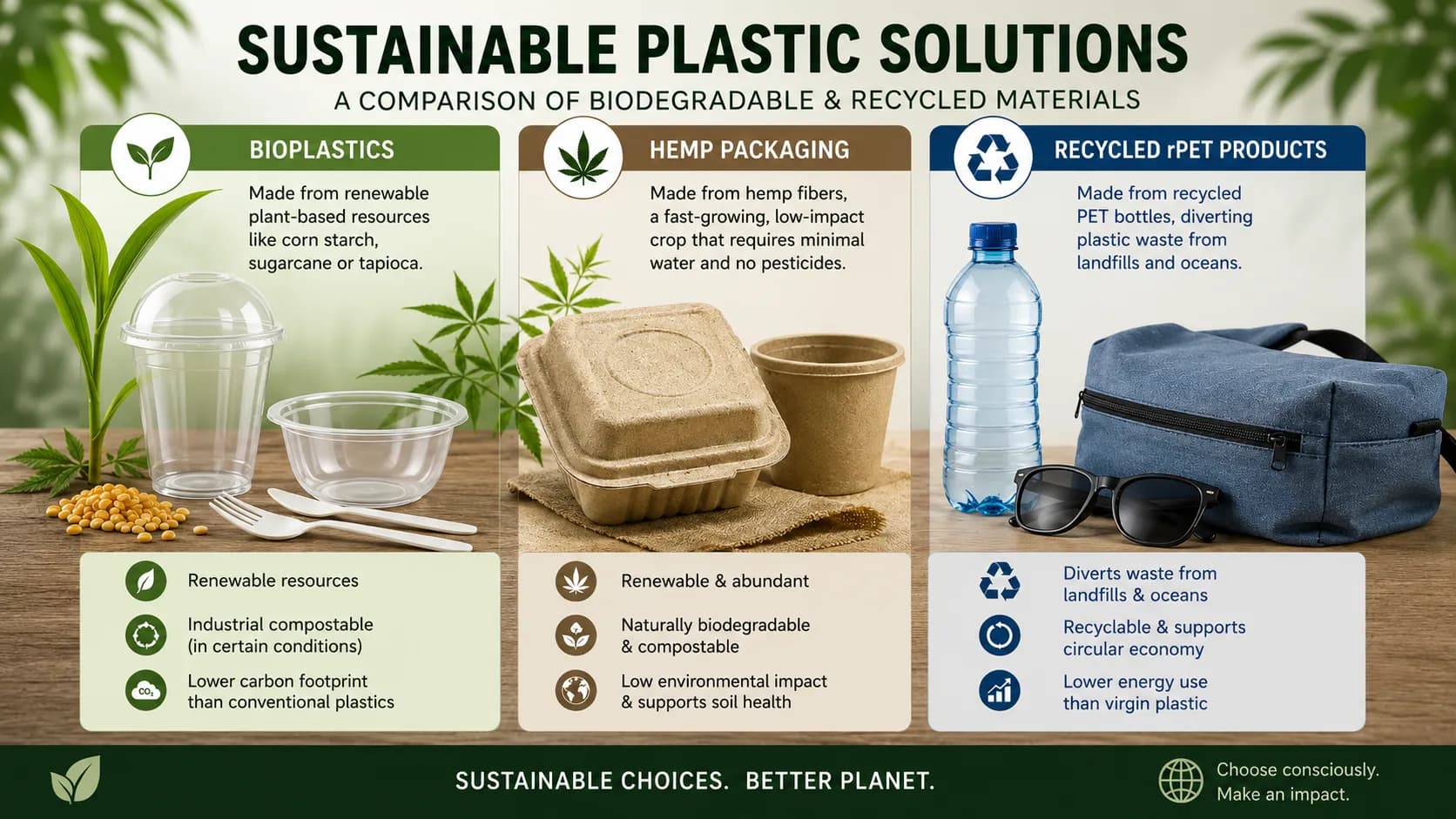
Eco-Friendly Plastic Alternatives and Sustainable Plastic Solutions That Actually Work
Explore eco-friendly plastic alternatives and sustainable solutions that reduce waste, improve sustainability, and help businesses move beyond traditional plastics.

Renewable Energy and the Eco-Friendly Future
Discover how renewable energy is powering an eco-friendly future through solar, wind, and clean technologies that reduce emissions and create a more sustainable world.

What is Green Technology? A Beginner's Guide to Clean Innovation and a Sustainable Future
Learn how green technology is creating a sustainable future through renewable energy, clean innovation, and eco-friendly solutions that reduce environmental impact.