Best Productivity Books to Boost Focus & Get More Done
Struggling to stay focused, beat procrastination, or manage your time? Discover the 10 best productivity books in 2026 that offer proven strategies to build better habits, improve concentration, and help you get more done with less stress.
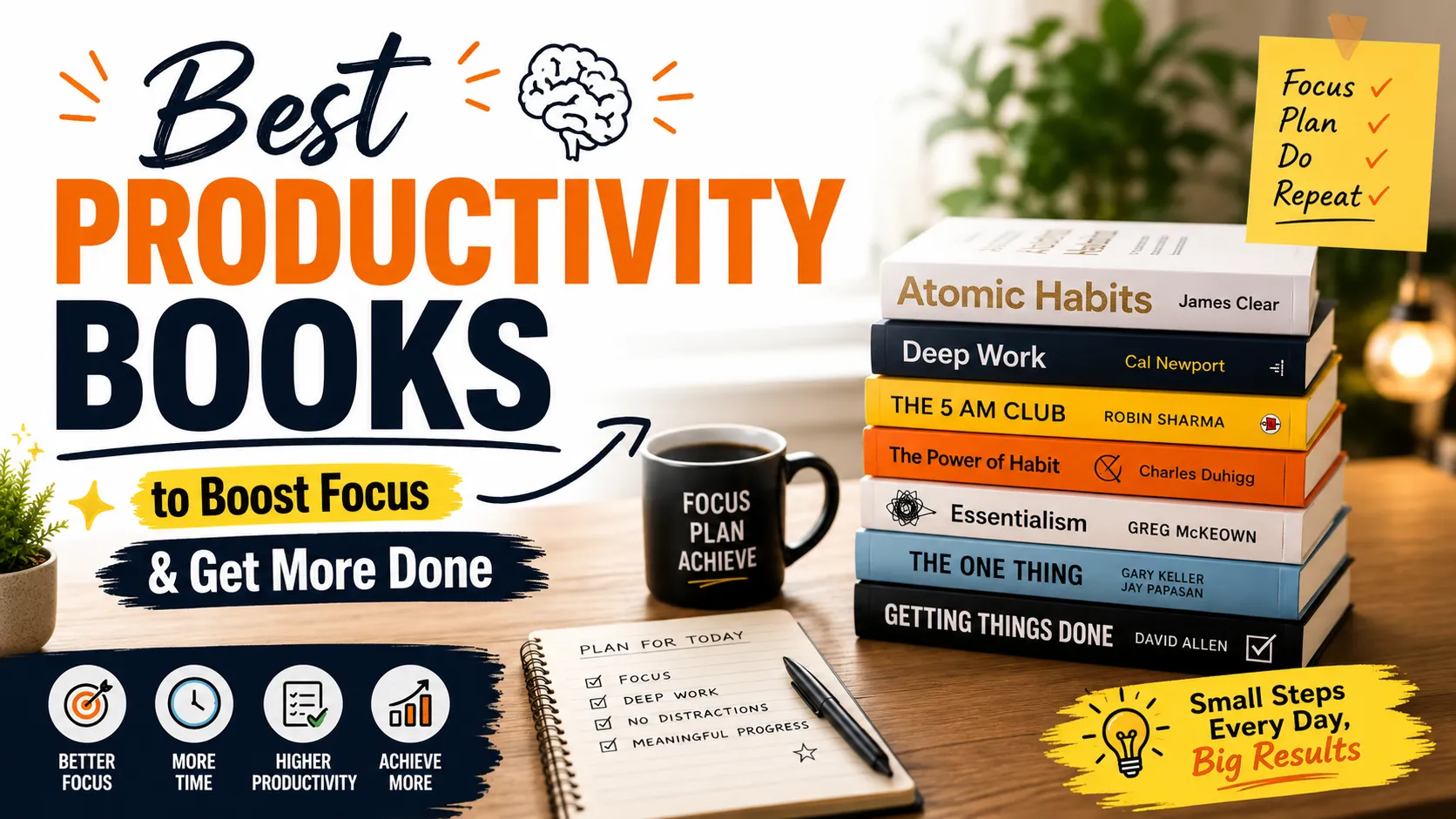
The best productivity books for most readers in 2026 are Atomic Habits for habit formation, Deep Work for focus, Getting Things Done for task management, Essentialism for priorities, and The One Thing for long-term goal clarity. Together, these five titles cover the full cycle of planning, focusing, and finishing work.
Why Productivity Books Still Matter In 2026
Most people do not struggle with productivity because they lack information. Search engines and social feeds already provide thousands of tips. The real struggle is choosing which tip to trust and which one fits a specific life.
A well-written productivity book solves this problem by organizing scattered advice into one coherent system. Instead of trying ten random tricks, a reader follows a tested method from start to finish, which makes the habit far more likely to stick.
Reading more books does not automatically make you productive. The right productivity book helps you take action because it pairs an idea with a clear next step rather than leaving you to guess what to do with the information.
This guide focuses on books that survive contact with a busy week. Each recommendation has a track record of helping students, entrepreneurs, remote workers, and creators finish more of what actually matters.
What Makes A Productivity Book Truly Valuable
Not every popular book deserves a place on this list. Four qualities separate a genuinely useful productivity book from one that simply sounds good.
Actionability
A valuable book turns ideas into steps you can try the same day. If a chapter cannot be summarized into one clear action, it is closer to entertainment than to a working system.
Simplicity
Complicated systems collapse during a busy week. The strongest productivity books reduce decisions instead of adding new ones, which makes the advice easier to follow under real pressure.
Evidence
Strong recommendations rest on research, case studies, or long-term personal testing rather than personal opinion alone. This is what separates a credible system from a passing trend.
Long-Term Usefulness
A great productivity book stays relevant after the first read. You return to it during planning sessions, slow months, or whenever motivation dips, and it still offers something useful.
The Best Productivity Books Across Every Category
The titles below were chosen because they consistently appear in real reading habits, not because they are trending. Each entry includes a short overview, the core lesson, who benefits most, and one practical takeaway you can use today.
Atomic Habits by James Clear
This book explains how tiny, repeatable actions compound into major change over time. It focuses on identity-based habits rather than short bursts of motivation.
Best for: Beginners who want a simple entry point into habit-building books.
Practical takeaway: Attach a new habit to an existing daily routine so it requires almost no extra willpower.
Deep Work by Cal Newport
Deep Work argues that the ability to concentrate without distraction is becoming rare and valuable. It offers concrete rules for protecting blocks of focused time.
Best for: Professionals and creators who need concentration books that address constant digital interruption.
Practical takeaway: Schedule one daily block with no notifications and treat it as a fixed appointment.
Getting Things Done by David Allen
This classic introduces a full capture and review system for tasks, projects, and commitments. It remains one of the most referenced action frameworks in modern offices.
Best for: Anyone juggling many responsibilities who needs a dependable workflow improvement system.
Practical takeaway: Write every task down the moment it appears so your mind stops trying to remember it.
Essentialism by Greg McKeown
Essentialism teaches readers to say no to almost everything so they can say yes to a small number of high-value goals.
Best for: Business owners and entrepreneurs overwhelmed by competing priorities.
Practical takeaway: Before agreeing to a new task, ask whether it is the most important thing you could do with that time.
The One Thing by Gary Keller
The book centers on a single focusing question that narrows daily effort toward the one task that makes everything else easier or unnecessary.
Best for: Readers who feel busy but rarely finish anything significant.
Practical takeaway: Identify the single task that matters most each morning before checking email or messages.
The Power of Habit by Charles Duhigg
This book explains the science behind habit loops and shows how cue, routine, and reward shape almost every repeated behavior.
Best for: Readers who want the research behind discipline books rather than just the steps.
Practical takeaway: Identify the cue that triggers a bad habit, then insert a better routine right after that same cue.
Indistractable by Nir Eyal
Indistractable focuses on the internal triggers that pull attention away from meaningful work, alongside practical distraction reduction techniques for phones and apps.
Best for: Remote workers struggling with notifications and constant context switching.
Practical takeaway: Turn off non-essential notifications and check messages at set times instead of reacting instantly.
Eat That Frog by Brian Tracy
This short, practical book is built around one idea: complete your hardest task first, before momentum and energy fade.
Best for: Students and professionals who tend to procrastinate on difficult work.
Practical takeaway: Identify your hardest task the night before and start your day with it instead of easier busywork.
Make Time by Jake Knapp and John Zeratsky
Make Time offers a flexible menu of tactics rather than one rigid system, allowing readers to test what fits their schedule and energy levels.
Best for: Creators and freelancers who want variety in productivity systems rather than one fixed method.
Practical takeaway: Pick one daily highlight each morning and protect a block of time for it before anything else fills the calendar.
168 Hours by Laura Vanderkam
This book challenges the belief that there is never enough time by showing how a full week actually gets spent and where hidden time exists.
Best for: Parents, employees, and business owners who feel chronically short on time.
Practical takeaway: Track every hour for one week before making any schedule changes, since most time loss is invisible until measured.
Best Productivity Books By Goal
Choosing a book by goal is often more useful than choosing by popularity. The list below matches each common goal with the strongest matching title from this guide.
Better Focus
Deep Work and Indistractable both target the same core problem from different angles: environment design and internal trigger awareness.
Better Time Management
168 Hours and Eat That Frog give the clearest, most measurable time management books for readers who want to see exactly where their hours go.
Habit Building
Atomic Habits and The Power of Habit work well together, pairing a practical system with the underlying psychology.
Deep Work
Deep Work remains the primary reference, while Make Time offers extra tactics for protecting that same kind of focused time.
Work-Life Balance
168 Hours helps readers see whether their schedule actually reflects their stated priorities, including family and rest.
Business Productivity
Essentialism and The One Thing both help founders and managers cut distractions and concentrate on the work that grows a business.
Productivity Frameworks You Can Apply Today
Books work best when paired with a repeatable framework. The four systems below appear across multiple titles in this guide and are simple enough to start using immediately.
Time Blocking
Assign specific hours to specific tasks instead of working from an open-ended list. This single change reduces decision fatigue throughout the day.
Weekly Planning
Spend fifteen minutes every Sunday or Monday morning mapping the week ahead. This short habit prevents most last-minute scrambling.
Habit Stacking
Attach a new habit to an action you already do automatically, such as reading one page right after your morning coffee.
Priority Systems
Rank tasks by impact rather than urgency. A short, important task often deserves attention before a long, low-value one.
How To Read Productivity Books Without Information Overload
Many readers finish a productivity book feeling inspired for a day and then return to old habits within a week. The cause is almost always passive reading rather than active reading.
Active Reading
Read with a pen nearby and underline only the sentences that suggest a specific action, not the ones that simply sound inspiring.
Notes
Summarize each chapter in one or two sentences immediately after finishing it. This forces the main idea to stay in memory longer.
Implementation
Choose one idea per chapter and test it for at least three days before moving on to the next chapter.
Reflection
At the end of each week, write down what worked, what did not, and what you will adjust. This closes the loop between reading and real change.
Experience-Based Lessons From Real Readers
Across years of coaching people through productivity changes, a few patterns repeat often enough to call them common mistakes rather than bad luck.
Readers who jump straight from one book to another, without testing any idea, rarely change their habits.
Readers who pick a system that matches their personality, rather than the most popular system online, stick with it far longer.
Readers who track one simple metric, such as tasks finished before noon, notice progress faster and stay motivated longer.
Readers who expect instant results often quit during week two, right before habits typically start to feel automatic.
The single biggest reason people stop applying productivity ideas is that they try to change too much at once. Small, boring, repeatable actions outperform big, dramatic overhauls almost every time.
A Thirty-Day Productivity Reading Plan
This plan spreads two core books across four weeks, leaving enough time to apply ideas instead of rushing through pages.
Week 1
Read the first half of Atomic Habits. Choose one habit to track daily and write it on a visible note or app.
Week 2
Finish Atomic Habits and review your tracked habit. Adjust the cue or reward if it has not become easier yet.
Week 3
Read the first half of Deep Work. Schedule one daily focus block and protect it from notifications and meetings.
Week 4
Finish Deep Work. Combine your new habit with your focus block and review both at the end of the week.
Expected outcome: By day thirty, most readers report one stable new habit and at least one protected daily block of focused work, both supported by evidence-based reasoning rather than guesswork.
Common Productivity Mistakes To Avoid
Reading Without Action
A finished book that never produces a new behavior has not actually improved productivity, no matter how many pages were read.
Too Many Books At Once
Switching between several productivity books at the same time scatters attention and makes it harder to apply any single system fully.
No System
Motivation fades within days. A simple system, even an imperfect one, outperforms pure willpower over weeks and months.
Chasing Motivation
Waiting to feel motivated before starting a task usually means the task never starts. Building a small routine removes the need to feel ready first.
Fast Loading And Stable Pages Matter Too
A genuinely helpful article should also load quickly and feel stable while reading, since slow or shifting pages push readers away before they finish.
Interaction Speed
Keep page layouts responsive and avoid unnecessary scripts so that taps, clicks, and scrolling all feel immediate rather than delayed.
Visual Stability
Reserve space for images before they load and avoid elements that shift position while a page is still rendering, so the reading experience stays steady from the first second.
Conclusion
The best productivity books are not the ones with the most pages or the loudest marketing. They are the ones that match your current goal and that you actually finish applying to.
If you are starting from zero, begin with Atomic Habits. If distraction is your biggest obstacle, start with Deep Work. If your task list feels chaotic, start with Getting Things Done.
Pick one book, one idea, and one action this week. Track it for thirty days using the plan above, then choose your next book once that habit feels automatic. Consistent small steps, repeated often enough, are what actually build a productive life.
Frequently Asked Questions
What are the best productivity books to read right now?
The best productivity books combine a clear system with proof that the system works in real life. Atomic Habits, Deep Work, Getting Things Done, Essentialism, and The One Thing are five titles that consistently help readers build better habits, protect their focus, and finish meaningful work.
Which productivity book should a complete beginner read first?
A beginner usually gets the fastest results from Atomic Habits. It teaches small, repeatable actions instead of big, complicated systems, so the ideas are easy to apply within a single day of reading.
Do productivity books actually work?
They work when the reader applies at least one idea immediately. A book on its own only provides information. The results come from turning one chapter into one new daily action and tracking it for a few weeks.
How many productivity books should I read in a year?
Three to five well-chosen books are enough for most people. Reading more than that without applying anything often creates information overload and slows down real progress.
Which books improve focus and concentration the most?
Deep Work and Indistractable are the strongest choices for readers who struggle with constant interruptions and shrinking attention spans.
Which books improve discipline and consistency?
The Power of Habit and Atomic Habits both explain how habits form in the brain and how to make good habits automatic instead of relying on willpower.
What is the fastest way to apply lessons from a productivity book?
Pick one chapter, write down a single action it suggests, and do that action the same day. Speed of action matters far more than speed of reading.
Are productivity books worth the time investment?
Yes, when the reader treats the book as a toolkit rather than entertainment. A two-hundred-page book that saves even thirty minutes a day pays for itself within a single week.
Can students benefit from productivity books?
Students benefit strongly from time blocking and priority systems found in books like Eat That Frog and Make Time, since these methods fit naturally around class schedules and deadlines.
What reading routine works best for productivity books?
Short, frequent reading sessions of fifteen to twenty minutes work better than long marathon sessions. This pace allows the reader to pause, take notes, and apply ideas before moving to the next chapter.
Should I read productivity books on paper or as audiobooks?
Either format works well. Audiobooks fit naturally into commutes and chores, while paper or e-readers make it easier to highlight and revisit key sections during implementation.
Share this article
Related Articles
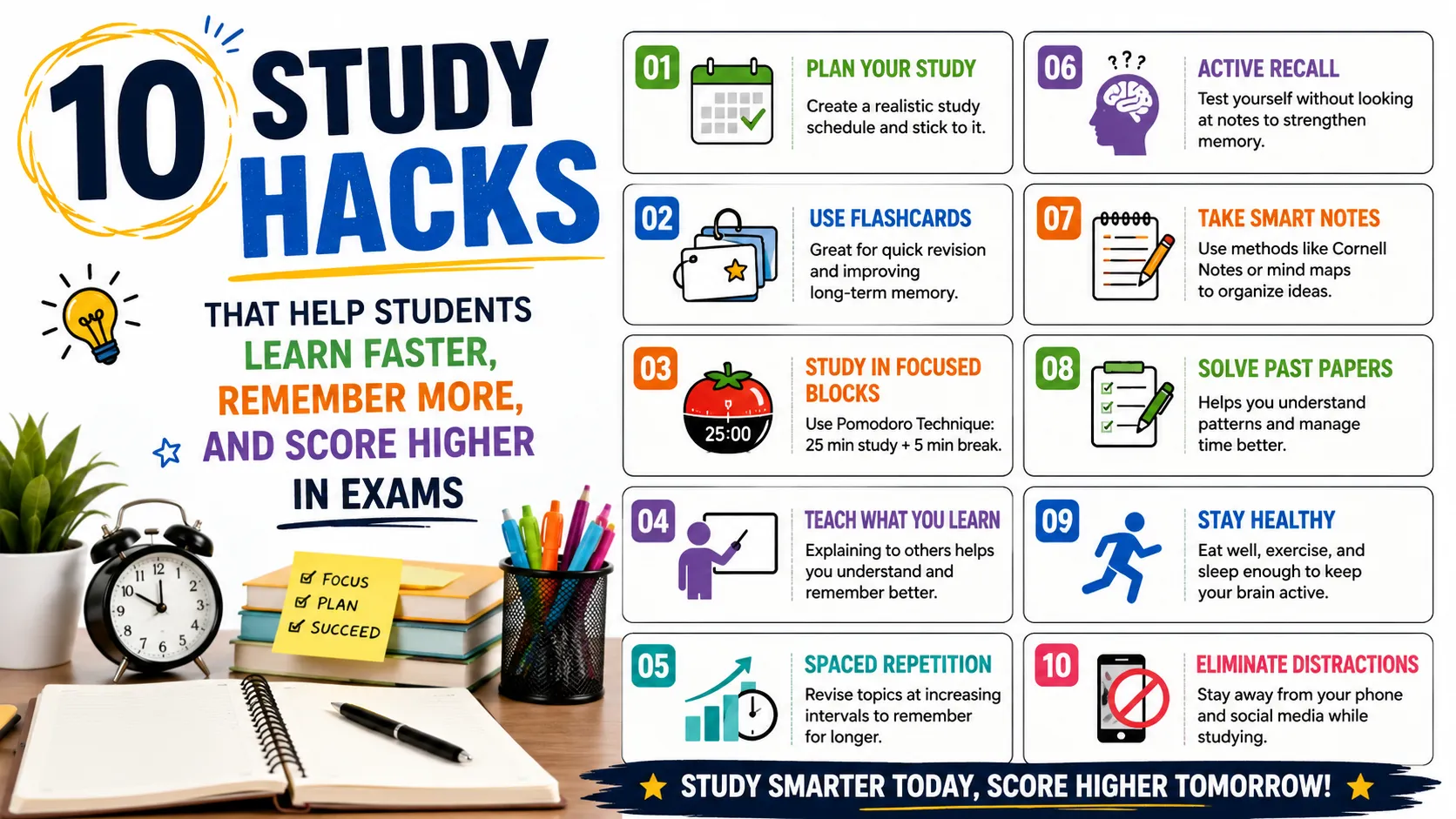
10 Study Hacks That Help Students Learn Faster, Remember More, and Score Higher in 2026
Learn 10 science-backed study hacks that help students study smarter, retain information longer, stay focused, and perform better in exams.

How Ed-Tech Uses Gamification to Boost Learning
Research confirms that gamification works. Students in gamified environments show 14% higher long-term knowledge retention, and gamified online courses achieve 30–40% better completion rates than non-gamified equivalents. Meanwhile, 89% of students say they would spend more time learning if tools felt more like games a number that explains why every major ed-tech platform from Duolingo to Khan Academy has gamification at its core.

How Does Ed-Tech Support Flipped Classrooms? The Complete 2026 Guide
The flipped classroom model reverses traditional instruction: students learn new content at home via digital tools, then apply knowledge in class through collaborative activities. Ed-tech makes this possible through Learning Management Systems (LMS), video-based learning platforms, adaptive learning tools, and formative assessment software. This guide covers every mechanism, top platform recommendations, research data, and real implementation strategies educators can use immediately.