
Wearable Health Devices Explained: Track Calories, Fitness, and Your Health Every Day
Discover how wearable health devices help track calories, fitness, sleep, heart rate, and overall wellness. Explore the smart technology changing personal healthcare in 2026.
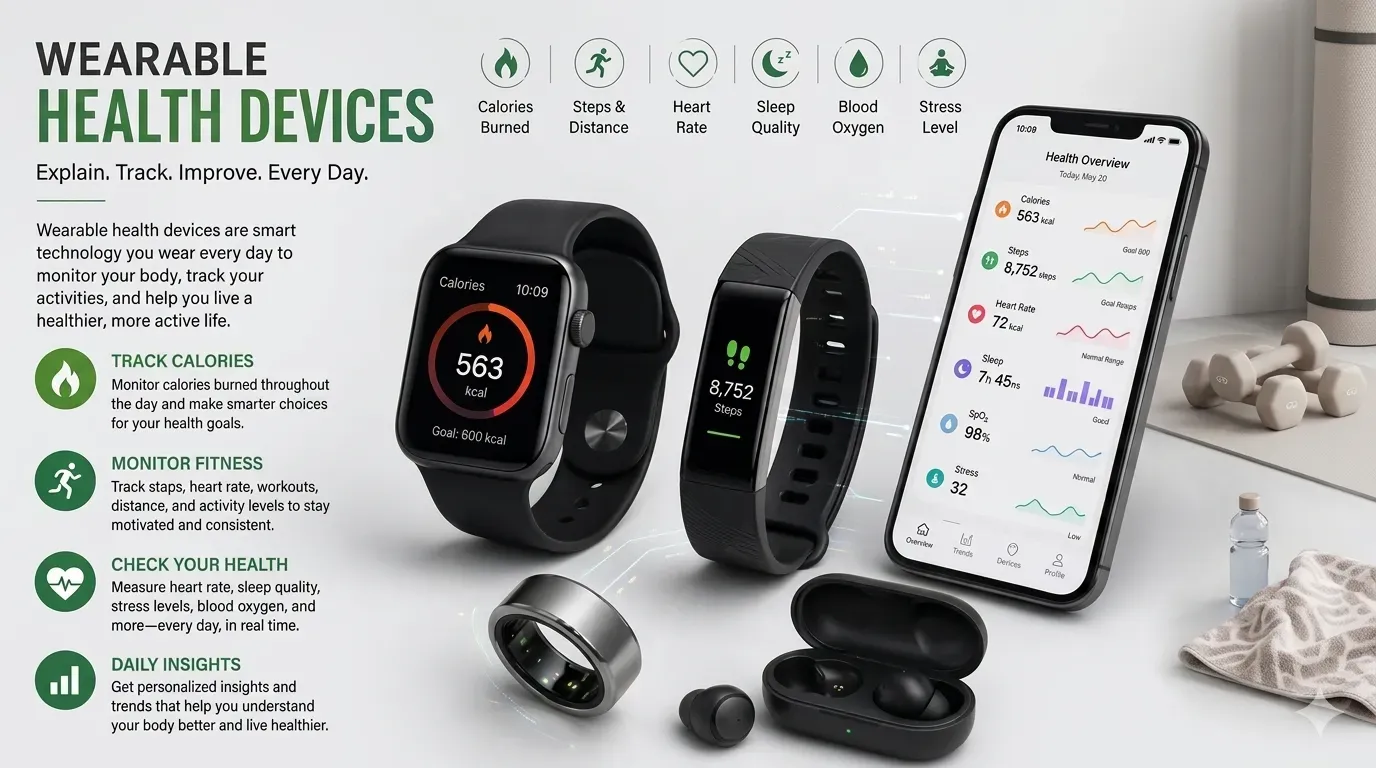
Most people who want to lose weight or get healthier face the same problem: they have no clear picture of what their body is actually doing each day. They eat roughly, move a little, sleep inconsistently, and wonder why nothing changes. Without data, health goals feel like guesswork.
Wearable health devices solve this problem. Fitness trackers and smartwatches collect real information about your body around the clock: calories burned, steps taken, heart rate, sleep quality, and more, and turn it into something you can actually act on. This guide explains how they work, what they track, and how to use them to reach your health and fitness goals without confusion or overwhelm.
What Are Wearable Health Devices?
Wearable health devices are small electronic gadgets you wear on your body, usually on your wrist, that continuously monitor your physical activity and health data. Fitness trackers, smartwatches, and health monitoring bands all fall into this category.
These devices use built-in sensors to measure things like your heart rate, movement, and body temperature. They sync this data to a smartphone app where you can view your progress, set goals, and track changes over time.
Real-life example: A person who wants to lose weight starts wearing a fitness tracker. Within one week, they discover they are only walking 3,000 steps a day, far less than the recommended 8,000 to 10,000. They also see that they are burning fewer calories than they assumed. This data alone motivates them to add a 20-minute walk after lunch. Within a month, their step count doubles, and they begin losing weight without any dramatic diet changes.
Wearable health devices matter because what gets measured gets managed. Most people dramatically overestimate how active they are and underestimate how much they eat. A device gives you an honest, objective picture, and honesty is where real change begins.
Wearable Health Device Tools List
1. Apple Health
Apple Health is a powerful health tracking app that collects data from wearable devices like the Apple Watch. It tracks steps, heart rate, sleep, calories, and even mental health trends. It can also sync with many third-party apps to give a complete health overview.
2. Fitbit App
The Fitbit App connects with Fitbit devices and provides detailed health insights. It tracks daily activity, calories burned, sleep patterns, and heart rate. It also offers personalized goals, challenges, and workout plans to keep users motivated.
3. Wearfit Pro
Wearfit Pro is a popular smartwatch app that tracks real-time health data. It includes features like heart rate monitoring, blood pressure tracking, step counting, and sleep analysis. It also provides smart notifications and device management options.
4. VeryFit
VeryFit is designed to work with fitness trackers and smart bands. It records daily activity such as steps, calories, and workouts. It also tracks sleep history and supports features like stress monitoring and blood oxygen tracking.
5. OHealth
It is used with OPPO and OnePlus wearable devices. It helps users monitor their workouts and health data, while also allowing customization of device settings and notifications.
6. WearHealth
WearHealth is a simple and user-friendly app that tracks steps, distance, calories, and heart rate. It allows users to set daily fitness goals and monitor their progress over time.
7. HealthWear
HealthWear focuses on advanced health tracking features such as ECG(Electrocardiogram), blood pressure, oxygen levels, and sleep analysis. It provides detailed reports to help users better understand their health condition.
What Do These Devices Track?
Wearable health devices can monitor a wide range of health metrics. They track your heart rate, count your daily steps, and calculate calories burned. In addition, they can monitor your sleep quality, blood oxygen level (SpO2), and stress levels. Some advanced devices also include features like blood pressure monitoring and ECG.
Types of Wearable Health Devices
1. Smartwatches
Smartwatches are the most popular type of wearable devices. Examples include Apple Watch Series 9 and Samsung Galaxy Watch 6. These devices not only show time but also monitor your health. They offer features like heart rate tracking, fitness tracking, and smartphone notifications.
2. Fitness Bands
Fitness bands are lightweight and more affordable. Examples include Xiaomi Mi Band 8 and Fitbit Charge 6. They are best for basic tracking such as step counting, calorie tracking, and sleep monitoring.
3. Smart Rings
Smart rings are small in size but come with powerful features. An example is the Oura Ring Gen 3. These are especially known for accurate sleep tracking and recovery insights.
4. Chest Straps
Chest straps are commonly used by athletes. An example is the Polar H10 Heart Rate Sensor. They provide highly accurate heart rate monitoring and are ideal for intense workouts.
5. Smart Clothing
Smart clothing has built-in sensors within the fabric. An example is the Hexoskin Smart Shirt. These garments can track breathing rate, heart rate, and body movement.
How Wearable Health Devices Work
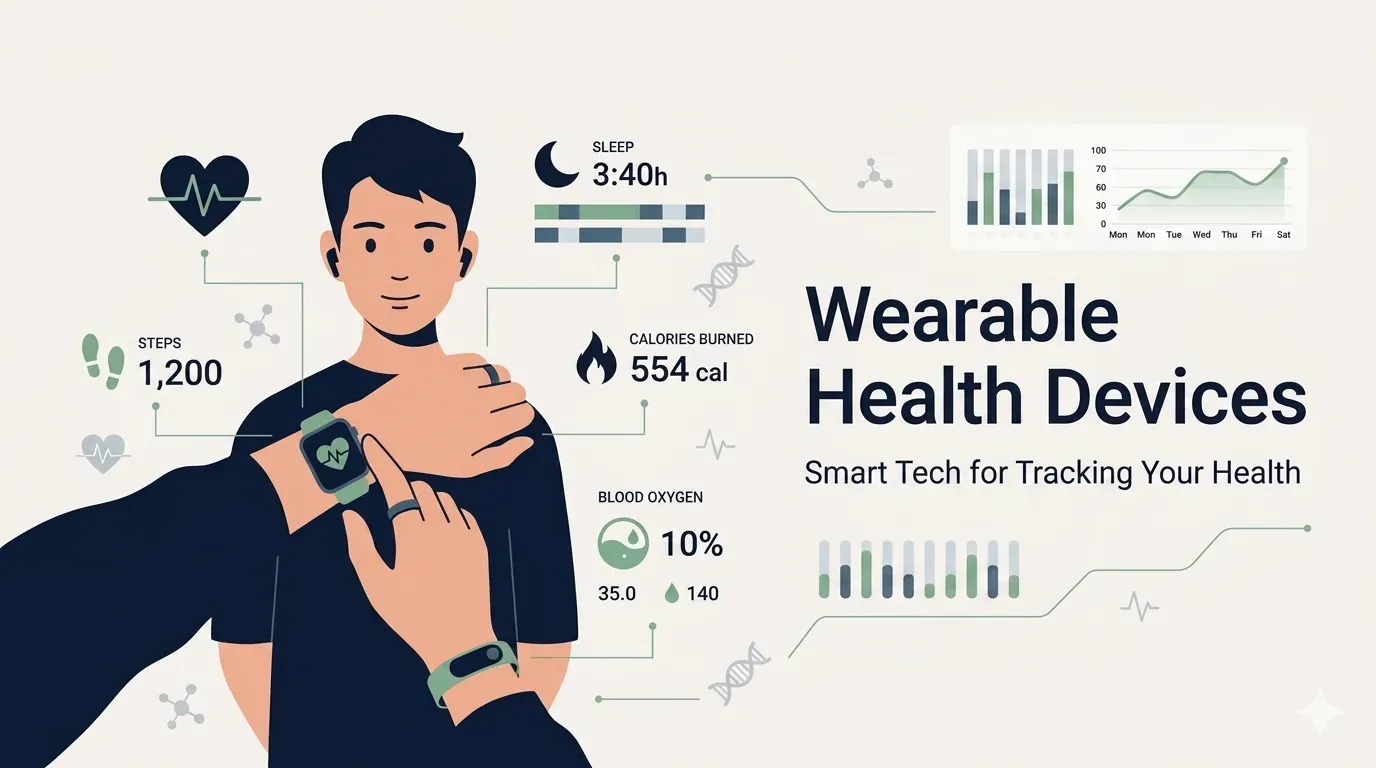
Modern wearable devices pack several sensors into a thin, lightweight band or watch. Each sensor measures a different aspect of your health:
Accelerometer: Detects movement and measures steps, distance, and activity intensity by sensing how your body moves throughout the day
Heart rate monitor: Uses light pulses on your skin to measure blood flow and calculate your heart rate continuously, even during sleep
GPS: Tracks outdoor routes and distances for running, cycling, and walking with location precision
SpO2 sensor: Measures blood oxygen levels, which can indicate breathing quality during sleep and exercise
All of this sensor data feeds into a companion app on your phone. The app analyzes the numbers, displays your daily stats in simple charts, and sends notifications to keep you on track toward your goals.
Important note on accuracy: Wearable health devices provide estimated data, not clinical measurements. Step counts are generally reliable. Calorie estimates can vary by 10 to 20 percent depending on your body type, fitness level, and how well the device fits. Treat the numbers as useful guides rather than exact facts; the trends matter more than the precise figures.
Calorie Tracking: How Wearable Devices Estimate Your Burn
Calorie tracking is one of the most popular features of wearable health devices and one of the most misunderstood. Here is a simple step-by-step explanation of how it works:
You enter your personal details: When you set up your device, you input your age, gender, height, and weight. The device uses this to calculate your basal metabolic rate, the number of calories your body burns at rest just to stay alive.
The device tracks your movement: Using its accelerometer and heart rate sensor, the device monitors how active you are throughout the day, every step, every workout, every moment of stillness.
It adds movement calories to your resting burn: Total calories burned equals your resting rate plus the extra calories used during activity. The device calculates this in real time and updates your app automatically.
You log what you eat: Most companion apps include a food diary where you can log meals manually or scan barcodes. The app then shows whether you are in a calorie deficit, surplus, or balance for the day.
Pairing your device's calorie burn data with a consistent food log gives you the complete picture that most people never have, exactly what is going in and what is going out. This combination is the most powerful tool for sustainable weight management.
Fitness and Activity Tracking: Why It Matters More Than You Think
Most people dramatically overestimate how active they are on a typical day. A fitness tracker removes that illusion and shows you the real number.
Step Count
Daily step count is the simplest and most universally used activity metric. Research consistently links higher step counts with lower body weight, better cardiovascular health, and reduced risk of chronic disease. Most wearable devices vibrate or notify you when you are falling short of your daily step goal, a gentle but effective nudge to move more.
Workout Tracking
Most wearables can detect and record specific types of exercise, such as walking, running, cycling, swimming, strength training, and more. They track workout duration, calories burned, heart rate zones, and pace. This data helps you understand how hard you are working and whether your efforts match your goals.
Daily Activity
Beyond formal exercise, wearables track your total daily movement and how many hours you spend sitting versus moving. Many devices alert you to stand up after prolonged inactivity. In real life, people forget that consistency in daily movement matters more than one intense gym session per week. A tracker keeps your entire day in view, not just your workout.
How Wearable Devices Help with Weight Loss
Weight loss comes down to a consistent calorie deficit over time, burning more than you consume. Wearable health devices support this in three practical ways:
Calorie awareness: Seeing your exact burn for the day makes it far easier to make informed food choices. When you know you burned 400 calories during a walk, you also know that a large dessert wipes out that entire effort.
Activity motivation: Visible progress step counts, active minutes, and calories burned create genuine motivation to keep moving. The act of tracking itself tends to increase activity levels in most users.
Goal setting: Most wearable apps let you set specific, measurable goals, such as daily steps, weekly active minutes, target calorie deficit. Goals make abstract intentions concrete and trackable.
From a practical perspective, tracking daily activity matters more than perfection. You do not need to hit your goal every single day. You need to move consistently more than you did before you started tracking, and the data gives you the feedback to do exactly that.
Health Monitoring Features: Beyond the Basics
Modern wearable devices go far beyond step counting. Here is what the best health monitoring features track and why they matter:
Heart Rate Monitoring
Continuous heart rate tracking shows you how hard your heart is working throughout the day during exercise, at rest, and during sleep. A resting heart rate that drops over weeks of regular exercise is one of the clearest signs that your cardiovascular fitness is improving.
Sleep Tracking
Sleep quality directly affects weight management, energy levels, and recovery from exercise. Wearables track how long you sleep, how often you wake, and how much time you spend in deep versus light sleep. Simple concept: data tracking equals better health decisions. When you see that four nights of poor sleep correlate with higher hunger and lower activity, you start prioritizing sleep differently.
Stress Monitoring
Many advanced wearables measure heart rate variability, subtle variations in the time between heartbeats as a proxy for stress levels. High stress readings on a tracker are a useful reminder to slow down, breathe, or rest before stress undermines your diet and exercise efforts.
Building a Daily Routine Around Your Wearable Device
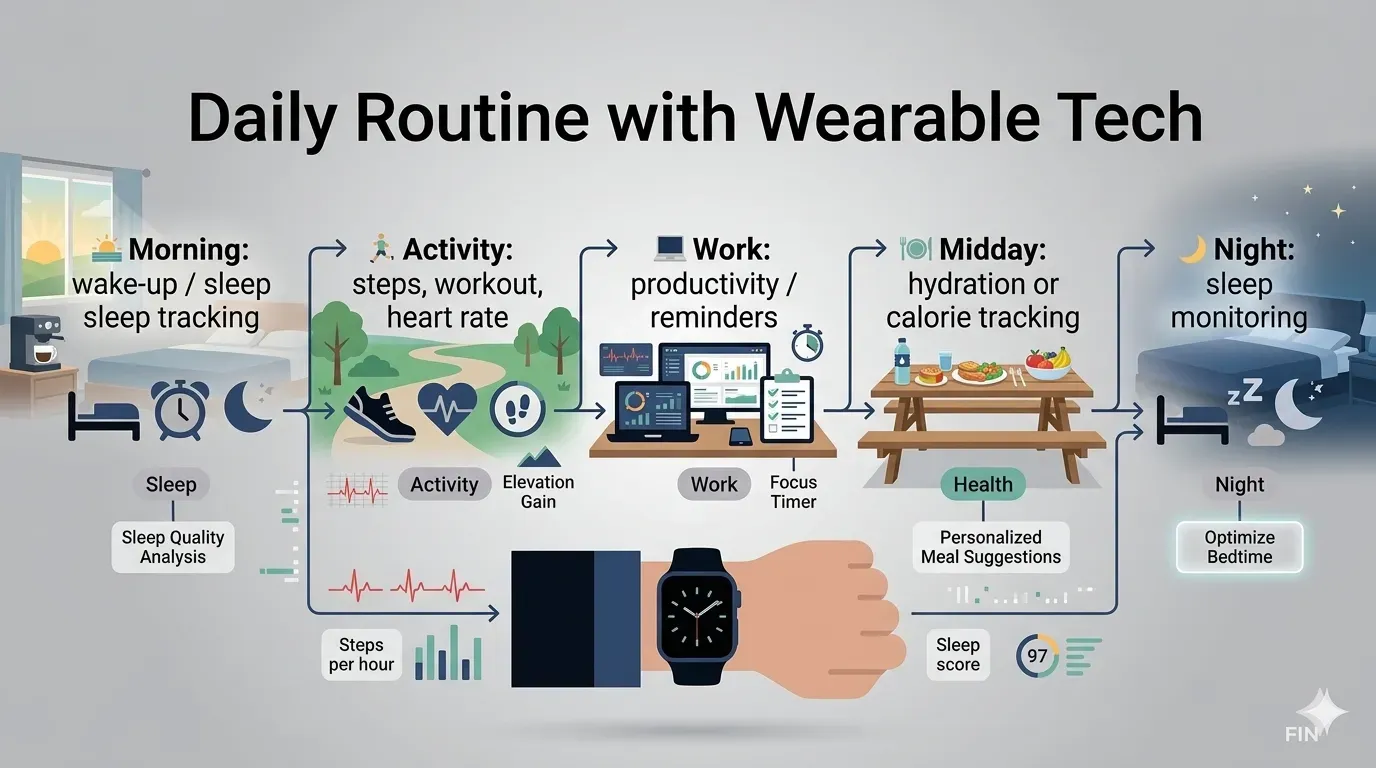
A wearable device is only as useful as the routine you build around it. Here is a practical daily structure that gets real results:
Morning: Check your sleep score and resting heart rate. Note how recovered you feel and adjust your planned workout intensity accordingly.
During the day: Monitor your step count at midday. If you are below half your daily goal, add a 15-minute walk before the afternoon ends.
Before meals: Log your food in the companion app. Compare what you plan to eat against your remaining calorie budget for the day.
After workouts: Review your heart rate data and calories burned. Over time, watch for improvements in heart rate recovery, a key indicator of growing fitness.
Evening: Review your daily summary. Steps, calories burned, active minutes, and calories consumed. Use this data to plan tomorrow, not to judge today.
Common Mistakes to Avoid
Relying only on device data: Many beginners make the mistake of trusting every number their device shows without question. Device data is a helpful estimate, not a medical measurement. Use it as a guide, not a gospel.
Ignoring consistency: In real life, people use their fitness tracker intensely for two weeks and then forget it exists. The value of wearable devices comes from months of consistent data, not sporadic use. Wear it every day.
Not setting goals: A device without a goal is just a watch. Use the app to set specific, realistic targets for daily steps, weekly workouts, calorie goals, and review your progress against them regularly.
Misunderstanding calorie data: Calorie burn estimates from wearables can vary significantly. Never use device calorie data as permission to eat large amounts. Treat it as directional guidance, a rough indicator of your output, not a precise accounting system.
Conclusion
Wearable health devices have made one of the most important things in health and fitness, accurate, consistent data, accessible to everyone. Whether your goal is weight loss, better sleep, improved fitness, or simply a clearer picture of your daily health, a fitness tracker or smartwatch gives you the feedback you need to make real progress.
But the device is only the beginning. The results come from what you do with the data, building consistent daily habits, setting clear goals, reviewing your progress honestly, and adjusting your routine based on what you learn.
Start simple. Wear the device every day. Track your steps and your food. Review your data each evening. Make small improvements week by week. Over time, those small improvements add up to a genuinely healthier life, and the data on your wrist will show you exactly how far you have come.
Frequently Asked Questions
Q: What are wearable health devices?
Wearable health devices are electronic gadgets, typically fitness trackers or smartwatches worn on the wrist that continuously monitor physical activity and health metrics, including steps, calories, heart rate, sleep, and stress levels. They sync data to a smartphone app for easy tracking and goal management.
Q: How do wearable devices track calories?
Wearable devices estimate calories burned by combining your personal data, age, weight, height, with real-time sensor readings of your movement and heart rate. This gives a running total of calories burned throughout the day. Most companion apps also let you log food intake to track the full calorie picture.
Q: Are wearable health devices accurate?
Wearable devices are reasonably accurate for step counting and relative activity tracking. Calorie estimates are less precise and can vary by 10 to 20 percent from your actual burn. Heart rate readings are generally reliable during steady-state activity but less so during high-intensity movement. Use the data as a consistent guide rather than an exact measurement.
Q: Can wearable devices help with weight loss?
Yes, when used consistently alongside a sensible diet. Wearable devices support weight loss by making calorie burn visible, motivating daily movement, and helping you set and track specific activity goals. The combination of calorie tracking and activity monitoring gives you the data needed to maintain a consistent calorie deficit over time.
Q: Which wearable device is best for beginners?
For beginners, the best device is one that is comfortable to wear every day, has a clear companion app, tracks steps and heart rate, and fits your budget. Start with a basic fitness tracker rather than a feature-heavy smartwatch. Mastering the fundamentals, steps, calories, and sleep delivers the most value when you are starting.
Share this article
Related Articles
Electronic Health Records Explained: What They Are, How They Work, and Why They Matter for Modern Healthcare
Discover Electronic Health Records (EHR) and how they improve healthcare. Learn how they work, their benefits, and why they are essential for modern medical systems.

HealthTech Explained: How Digital Healthcare Tools Are Changing the Way We Live and Heal
Discover how HealthTech is transforming modern healthcare in 2026. Learn how digital tools, AI, and smart medical technologies are improving diagnosis, treatment, and everyday health management.