
HealthTech Explained: How Digital Healthcare Tools Are Changing the Way We Live and Heal
Discover how HealthTech is transforming modern healthcare in 2026. Learn how digital tools, AI, and smart medical technologies are improving diagnosis, treatment, and everyday health management.

Healthcare Was Broken. Technology Is Fixing It
You wait three weeks for a doctor’s appointment. You drive 45 minutes to a clinic for a five-minute consultation. You pay hundreds of dollars for a test result that takes another week to arrive. Then you do it all over again.
For millions of people around the world, this is not a rare bad day. It is the everyday reality of accessing healthcare.
The good news is that something is changing and fast. Digital healthcare technology is making it possible to see a doctor from your sofa, monitor your heart rate from your wrist, and receive a diagnosis powered by artificial intelligence that catches what human eyes might miss.
This is the world of HealthTech. And whether you are a patient, a caregiver, or simply someone who wants to take better control of their health, understanding it could change your life.
This guide covers everything that HealthTech is, how it works, which tools matter, and how to use it wisely.
What Is HealthTech?
HealthTech, short for health technology, refers to the use of digital tools, software platforms, and smart devices to improve healthcare delivery, patient outcomes, and medical research.
It covers a wide range from the app on your phone that tracks your sleep, to the AI system in a hospital that analyses X-rays, to the smartwatch that alerts you when your heart rate is dangerously high.
A simple real-life example:
Maria is 67 years old and lives alone in a rural town. The nearest specialist is two hours away. Before HealthTech, managing her diabetes meant expensive trips, long waits, and rushed consultations.
Today, she:
Uses a glucose monitor that automatically sends readings to her doctor
Has a monthly video appointment via a telemedicine app
Gets medication reminders through a health app on her phone
Wears a smartwatch that tracks her activity and sleep
Her doctor sees her data in real time. Her condition is managed proactively, not reactively. Her quality of life is genuinely better, and she has not made the two-hour drive in months.
That is what HealthTech looks like in practice.
Why HealthTech Is Important
Healthcare systems around the world are under pressure. Ageing populations, rising chronic disease rates, and limited medical resources are creating a gap between demand and supply.
HealthTech helps bridge that gap by:
Extending care beyond the walls of a hospital
Reducing the administrative burden on medical staff
Making preventive care more accessible and affordable
Giving patients more control over their own health data
It is not a replacement for doctors or hospitals. It is a smarter, more connected layer that makes the whole system work better.
How HealthTech Is Transforming Healthcare
The impact of digital health tools is not theoretical. It is happening right now, in real hospitals, clinics, and living rooms around the world.
Faster Diagnosis
Traditional diagnosis depends on a doctor’s availability, expertise, and access to test results, all of which take time. AI-powered diagnostic tools can analyze medical images, blood test data, and patient history in seconds, flagging concerns that might take a human clinician much longer to identify.
In some cases, AI systems have detected early-stage cancers and diabetic retinopathy with accuracy that matches or exceeds that of experienced specialists.
Improved Patient Care
When patient data is centralized, shareable, and always up to date, care improves. A cardiologist, a GP, and a physiotherapist can all access the same patient record with no fax machines, no repeated forms, no lost information.
Remote monitoring means doctors can track patients between appointments, not just during them.
Cost Reduction
In real life, healthcare systems struggle with enormous administrative costs. HealthTech reduces these by automating scheduling, billing, record-keeping, and follow-up communications, freeing up clinical time for actual patient care.
Telemedicine alone reduces the cost per consultation significantly compared to in-person visits, while eliminating travel costs for patients.
Telemedicine Platforms Healthcare Without Boundaries
Telemedicine is one of the most visible and impactful branches of HealthTech. It allows patients and healthcare providers to connect remotely via video call, phone, or secure messaging without the need for an in-person visit.
How Telemedicine Works Step by Step
Book an appointment: The patient logs into a telemedicine platform (such as Teladoc, Babylon Health, or Practo) and books a slot with an available doctor, often within hours, sometimes within minutes.
Prepare your details: Before the call, the patient fills in a brief symptom checklist. The system may pull in existing health records automatically.
The consultation: The patient and doctor connect via secure video. The doctor reviews symptoms, asks questions, and may request photos or additional data from connected devices.
Prescription or referral: If needed, the doctor sends a digital prescription directly to the patient’s pharmacy or refers them to a specialist, all within the platform.
Follow-up: Follow-up messages, test results, and care plans are delivered through the same secure system.
Benefits for Patients
Access to care regardless of location
No travel, no waiting rooms, no parking stress
Often faster appointments and lower consultation fees
Easier management of ongoing or chronic conditions
Benefits for Doctors
Expanded patient reach beyond geographic limits
Reduced no-show rates
More efficient scheduling and documentation
Ability to follow up asynchronously via secure messaging
Many patients are initially skeptical about telemedicine: “Can a doctor really help me through a screen?” In practice, the vast majority of primary care consultations (routine check-ups, prescription renewals, minor illness, mental health support) translate very well to a remote format.
Digital Health Apps Wellness in Your Pocket
Health apps have moved well beyond simple step counters. Today, they cover almost every aspect of physical and mental well-being.
Fitness and Activity Tracking
Apps like Apple Health, Google Fit, and Strava track steps, distance, calories, workouts, and sleep. They connect with wearable devices to give a continuous picture of your physical activity.
More importantly, they set goals, send reminders, and visualize progress in ways that keep users engaged and motivated.
Nutrition and Diet Apps
Apps like MyFitnessPal and Cronometer allow users to log meals, track calorie intake, and monitor macronutrients. Some use AI to identify food from photos, making logging faster and more accurate.
For people managing conditions like diabetes, coeliac disease, or high blood pressure, these tools help make nutrition practical, not just theoretical.
Mental Health Apps
This is one of the fastest-growing areas in digital health. Apps like Calm, Headspace, Woebot, and BetterHelp offer guided meditation, cognitive behavioural therapy exercises, mood tracking, and access to licensed therapists.
Many patients face a significant barrier to mental healthcare, stigma, cost, and limited availability of professionals. Mental health apps lower that barrier considerably, offering support that is private, affordable, and available at any hour.
From a practical perspective, health apps work best when they integrate with your main health record. A siloed fitness app that your doctor never sees has limited clinical value. Connected apps that feed into a shared record are far more powerful.
Electronic Health Records: The Digital Backbone of Modern Medicine
An Electronic Health Record (EHR) is a digital version of a patient’s complete medical history, diagnoses, medications, allergies, test results, visit notes, and more stored securely and accessible to authorized healthcare providers.
Why EHRs Matter
Before EHRs, patient records were paper-based, stored in physical folders, and effectively locked inside a single clinic or hospital. If you moved, switched doctors, or visited an emergency room in another city, your medical history often went with you only in your memory.
EHRs change this completely. A well-implemented EHR means:
Any authorized clinician can access your full history instantly
Duplicate tests and procedures are avoided
Drug interactions are flagged automatically
Care coordination between specialists becomes seamless
How EHRs Work
The patient’s data is stored on secure, encrypted servers. When a doctor opens your file, they see a structured summary of current medications, past diagnoses, allergies, immunizations, lab results, and clinical notes all in one place.
Modern EHR platforms like Epic, Cerner, and Meditech also integrate with lab systems, imaging platforms, pharmacy networks, and patient-facing apps, creating a genuinely connected ecosystem around the patient.
The Privacy Dimension
EHRs store extraordinarily sensitive data. Strong EHR platforms use encryption, role-based access controls, and detailed audit trails so only the right people see the right information, and every access is logged.
Patients in many countries also have the legal right to access, download, and correct their own records. Knowing your rights here matters.
AI in Healthcare: The Intelligent Layer
Artificial intelligence is not the future of healthcare. It is the present. AI is already deployed in hospitals, diagnostic labs, and patient-facing apps worldwide, and its impact is only accelerating.
Disease Prediction
AI systems can analyze large datasets, patient history, lifestyle factors, genetic information, and environmental data to predict which individuals are at elevated risk of conditions like heart disease, type 2 diabetes, or certain cancers.
This shifts medicine from reactive to proactive. Instead of treating illness after it develops, clinicians can intervene earlier when outcomes are better and costs are lower.
Diagnosis Support
AI image recognition tools analyze X-rays, MRI scans, and pathology slides with remarkable accuracy. They do not replace radiologists; they work alongside them, flagging areas of concern and reducing the chance of a missed finding.
In ophthalmology, AI tools have been approved by regulators in several countries to screen for diabetic eye disease autonomously, a task that previously required a specialist clinic visit.
Chatbots and Virtual Health Assistants
AI-powered chatbots like Ada, Babylon’s symptom checker, and NHS 111 Online help patients navigate their symptoms before deciding whether to seek in-person care. They ask structured questions, assess risk, and recommend next steps.
This reduces unnecessary emergency room visits and helps people with genuinely urgent symptoms understand that they need to act quickly.
From a practical perspective, AI tools in healthcare are only as good as the data they are trained on. Bias in training data can lead to biased recommendations. Understanding this limitation is essential. AI is a powerful tool, not an infallible oracle.
Remote Patient Monitoring Care That Follows You Home
Remote patient monitoring (RPM) uses connected devices to collect health data from patients in their everyday environment and transmit it securely to their care team.
How It Works
The patient wears or uses a monitoring device: a blood pressure cuff, a glucose sensor, a pulse oximeter, or a cardiac monitor. The device captures readings continuously or at set intervals. That data flows automatically to the patient’s care team, who review it and act if something falls outside safe parameters.
Heart Rate and Cardiac Monitoring
Wearable cardiac monitors can detect arrhythmias, irregular heart rhythms that may only occur briefly and would be missed in a standard clinic ECG. Devices like the KardiaMobile or Apple Watch ECG feature allow patients to record a medical-grade heart trace at any moment and share it with their cardiologist instantly.
Chronic Disease Monitoring
For patients managing conditions like COPD, heart failure, hypertension, or diabetes, RPM replaces the traditional “come back in three months” model with continuous, real-time oversight.
A patient with heart failure whose weight increases by two kilograms over two days is a known warning sign of fluid retention that can be identified and treated before they deteriorate to the point of hospitalization. Early intervention is better for the patient and significantly cheaper for the healthcare system.
Wearable Health Devices: Your Body’s Data, On Your Wrist
Wearable health devices have become one of the most visible faces of HealthTech. From basic fitness bands to sophisticated medical-grade monitors, they put health data collection literally in the hands of everyday users.
Smartwatches
Devices like the Apple Watch, Samsung Galaxy Watch, and Garmin range do far more than tell the time. They continuously track:
Heart rate and heart rhythm
Blood oxygen levels (SpO2)
Sleep stages and quality
Physical activity and calorie expenditure
Stress levels (via heart rate variability)
Skin temperature trends
Some models can detect falls and automatically call emergency services, a potentially life-saving feature for elderly users living alone.
Fitness Bands
More affordable options like Fitbit, Xiaomi Mi Band, and Whoop offer many of the same core tracking features in a lighter, simpler form. They are particularly useful for users focused on sleep, activity, and recovery rather than clinical-grade monitoring.
Medical-Grade Wearables
Beyond consumer devices, a growing category of medical wearables is designed for clinical use: continuous glucose monitors (CGMs) like the Dexterity G7 or Libre, cardiac patches, respiratory monitors, and smart inhalers that track usage and technique.
These devices sit at the intersection of consumer technology and medical equipment, designed to be worn comfortably while meeting clinical accuracy standards.
How All HealthTech Systems Work Together
The real power of digital healthcare is not in any single tool. It is in how the tools connect.
A Practical Real-Life Workflow
Here is what integrated HealthTech looks like for a patient managing a chronic condition:
Morning: The patient’s CGM automatically records overnight glucose trends. Their smartwatch has logged seven hours of sleep and flagged a slightly elevated resting heart rate.
Midday: The patient logs their lunch using a nutrition app. The app’s AI flags that today’s meal is higher in simple carbohydrates than their usual diet and suggests a short walk to support glucose regulation.
Afternoon: Their doctor reviews the morning’s data on the EHR dashboard, glucose readings, sleep quality, activity levels, and medication adherence, all fed in automatically from connected devices.
Evening: The patient has a scheduled telemedicine check-in. Because the doctor already has two weeks of continuous data, the conversation is focused and efficient. The doctor adjusts the medication dose. The new prescription is sent digitally to the pharmacist before the call ends.
Ongoing: An AI system running in the background analyzes patterns across the patient’s data. It identifies a trend that suggests early kidney stress is a known complication of diabetes. The system flags this to the clinical team for investigation. Early intervention begins.
This is not science fiction. This is the direction HealthTech is actively moving in, and in many cases, it is already here.
Common Mistakes in HealthTech (And How to Avoid Them)
Mistake 1: Ignoring Digital Tools Entirely
Some patients and clinicians resist HealthTech out of skepticism or unfamiliarity. This is understandable, but it means missing out on tools that genuinely improve outcomes.
Fix: Start small. One health app, one telemedicine consultation, one wearable device. Experience builds confidence.
Mistake 2: Data Privacy Complacency
Health data is among the most sensitive personal data that exists. Many users accept app permissions without reading them, not realizing they may be sharing detailed health information with advertisers.
Fix: Only use platforms that are transparent about data use, offer clear privacy controls, and comply with relevant regulations (HIPAA in the US, GDPR in Europe). Read the privacy policy before you sign up.
Mistake 3: Over-Dependence on Technology
A smartwatch that measures SpO2 is a useful tool. It is not a pulse oximeter prescribed by a doctor. Health tech empowers patients; it does not replace clinical judgement.
Fix: Use HealthTech to inform conversations with your healthcare provider, not to replace them. If a device shows something concerning, speak to a professional rather than self-diagnosing.
Mistake 4: Using Tools Without Understanding Them
Many patients are prescribed or download digital health tools and never learn to use them properly. An unused CGM or a misconfigured health app provides no value.
Fix: Take the time to learn each tool. Most platforms offer tutorials, customer support, and community forums. Five minutes of setup saves hours of confusion later.
Conclusion
The technology exists. The tools are accessible. The potential to catch disease earlier, to reach patients who could never otherwise access care, to manage chronic conditions with precision that was unimaginable a decade ago, is genuinely extraordinary.
But technology is a tool. It works best when it is used thoughtfully, connected intelligently, and guided by the human judgment of skilled clinicians and informed patients.
Start with one area that matters to you. A telemedicine platform if access is your challenge. A health app if habit-building is your goal. A wearable, if you want deeper insight into your body’s patterns.
Learn it well. Connect it to your broader care. And use it as a conversation starter with your healthcare provider, not a replacement for one.
HealthTech at its best does not make healthcare colder or more clinical. It makes it more personal, more continuous, and more human.
Frequently Asked Questions
Q: What is HealthTech?
HealthTech is the application of digital technology, including apps, software platforms, AI, and smart devices, to improve healthcare delivery, patient outcomes, and medical research. It covers everything from telemedicine apps to AI diagnostic tools to wearable health monitors.
Q: How is technology used in healthcare?
Technology is used across the entire healthcare journey, helping patients book and attend appointments remotely, enabling doctors to access complete patient records instantly, supporting clinical diagnosis through AI image analysis, monitoring patients continuously through connected devices, and managing the administrative side of healthcare more efficiently.
Q: What are examples of HealthTech?
Common examples include telemedicine platforms (Teladoc, Babylon Health), digital health apps (MyFitnessPal, Calm, Woebot), electronic health record systems (Epic, Cerner), wearable devices (Apple Watch, Fitbit, continuous glucose monitors), AI diagnostic tools, and remote patient monitoring systems for chronic disease management.
Q: Is telemedicine safe?
Yes, when used appropriately. Reputable telemedicine platforms use encrypted, HIPAA or GDPR-compliant connections. Consultations are conducted by licensed, verified healthcare professionals. For most primary care needs, prescription renewals, minor illness, mental health support, and chronic disease management, telemedicine is clinically safe and effective. For emergencies or conditions requiring physical examination, in-person care remains essential.
Q: How does AI help healthcare?
AI helps healthcare in several key ways: it analyses medical images to support diagnosis, predicts disease risk from patient data patterns, powers chatbots that help patients navigate symptoms, automates administrative tasks to reduce clinician burden, and identifies trends across large datasets that no human team could manually review. It works best as a support tool that enhances rather than replaces clinical expertise.
Share this article
Related Articles
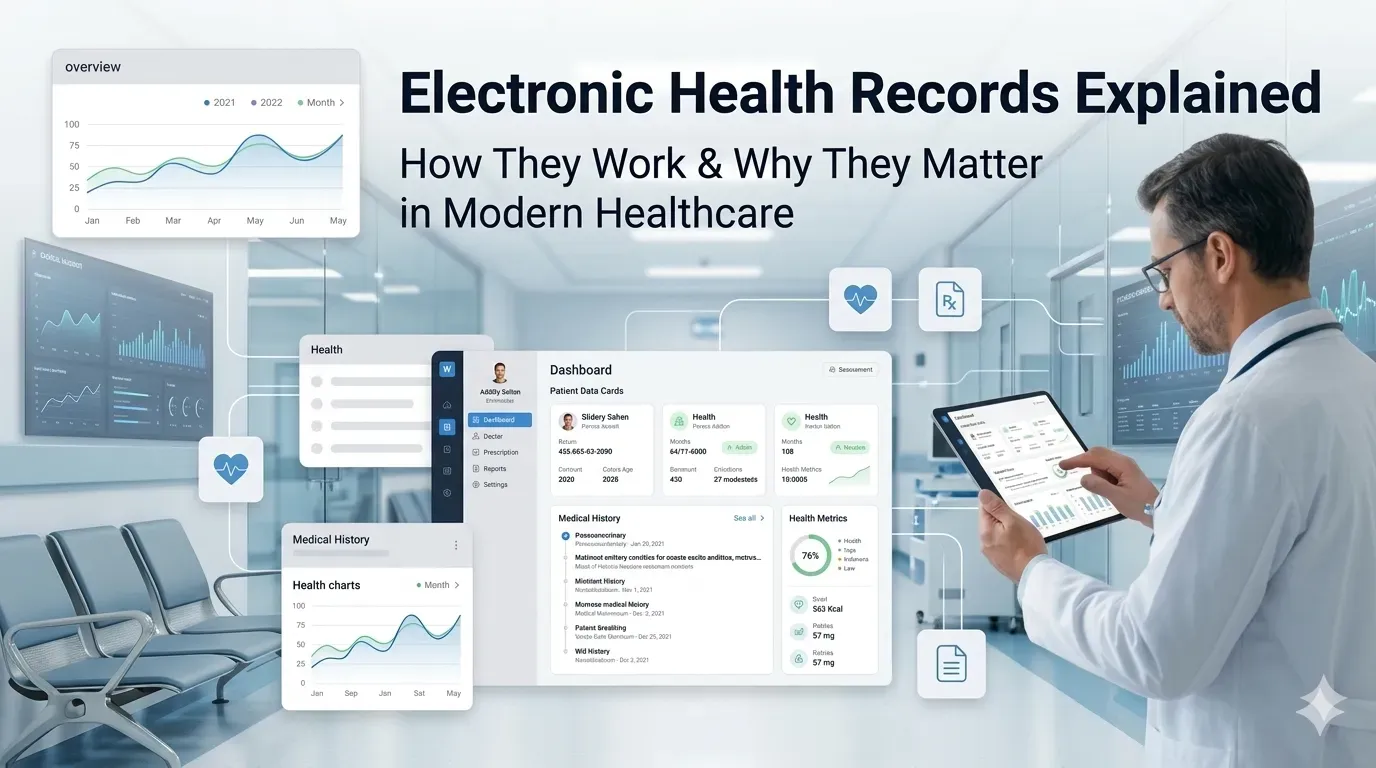
Electronic Health Records Explained: What They Are, How They Work, and Why They Matter for Modern Healthcare
Discover Electronic Health Records (EHR) and how they improve healthcare. Learn how they work, their benefits, and why they are essential for modern medical systems.
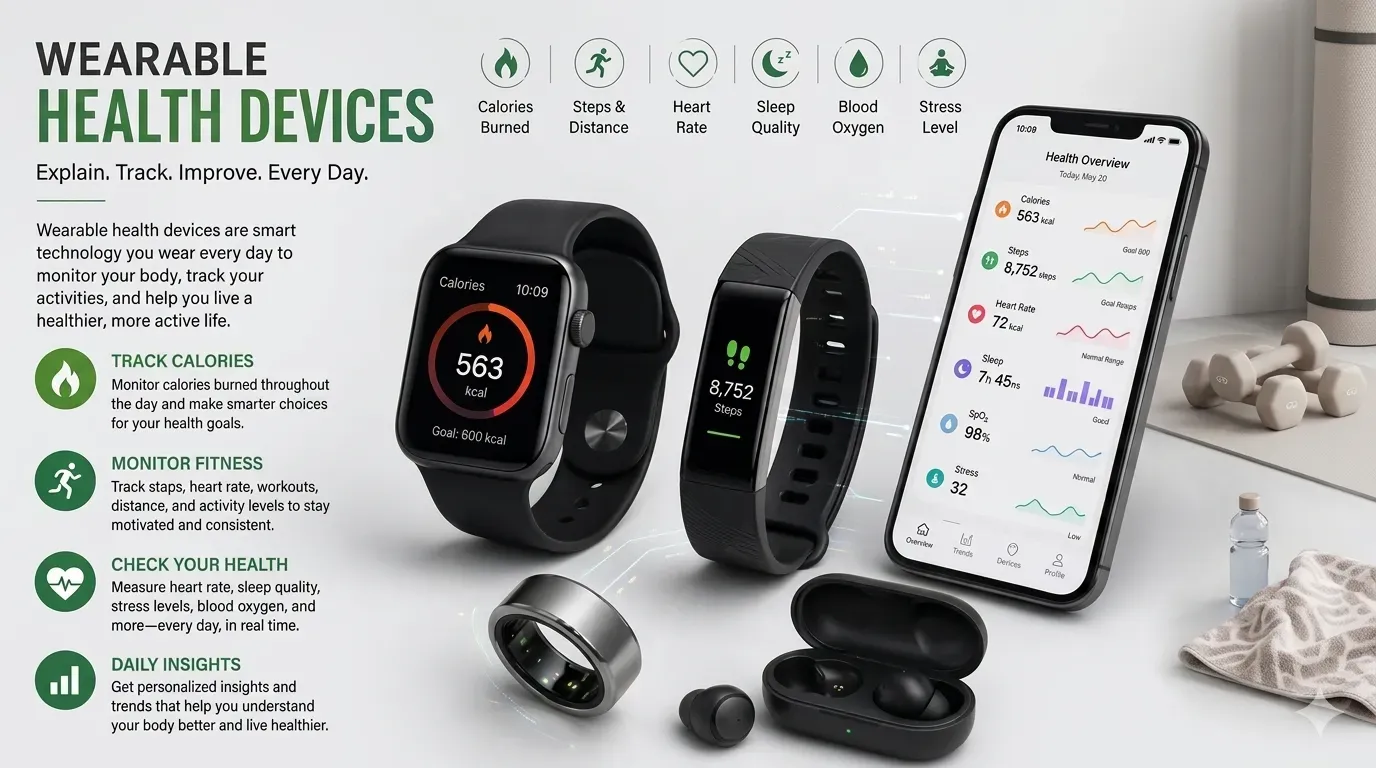
Wearable Health Devices Explained: Track Calories, Fitness, and Your Health Every Day
Discover how wearable health devices help track calories, fitness, sleep, heart rate, and overall wellness. Explore the smart technology changing personal healthcare in 2026.