
Electronic Health Records Explained: What They Are, How They Work, and Why They Matter for Modern Healthcare
Discover Electronic Health Records (EHR) and how they improve healthcare. Learn how they work, their benefits, and why they are essential for modern medical systems.
Your Medical History Should Follow You, Not Get Lost
You visit a new doctor. They ask about your allergies. You try to remember the medication that caused a reaction three years ago; was it amoxicillin or something else? You are not sure. The doctor makes a note and moves on.
Later, a prescription is written. It interacts badly with a medication your cardiologist prescribed six months ago, a medication the new doctor had no way of knowing about because it was recorded in a completely different system, in a different hospital, on the other side of the city.
This is not a rare scenario. It is one of the most common and preventable problems in healthcare today. And it is exactly the problem that electronic health records are designed to solve.
This guide explains what electronic health records are, how they work, why they matter, and how digital health systems are making healthcare safer, faster, and more connected for patients and providers alike.
What Are Electronic Health Records?
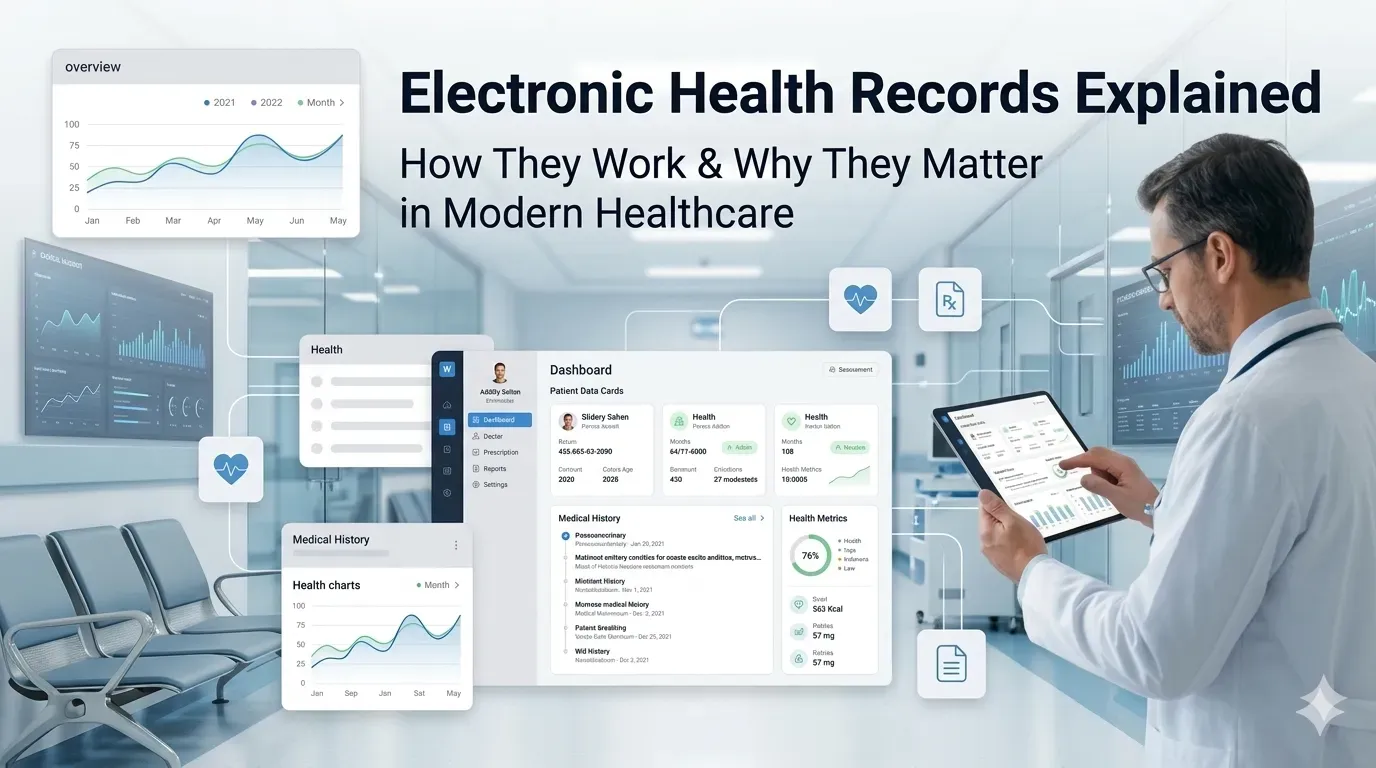
An Electronic Health Record or EHR is a digital version of a patient’s complete medical history, stored securely in a computer system and accessible to authorised healthcare providers.
It replaces the traditional paper file that used to sit in a folder in a single clinic. Instead of being locked in one location, an EHR can be accessed with the right permissions by any doctor, specialist, nurse, or pharmacist involved in a patient’s care, wherever they are.
An EHR typically contains:
Personal details and contact information
Medical history and past diagnoses
Current and previous medications
Known allergies and adverse reactions
Lab test results and imaging reports
Vaccination records
Surgical history
Clinical notes from consultations
Referrals and specialist reports
A real-life example:
Ahmed is 54 years old and sees three different doctors: a GP, a cardiologist, and a diabetes specialist. Before EHR systems were in place, each doctor kept separate notes. None of them had a complete picture of Ahmed’s health.
With a connected EHR, all three clinicians see the same record. When the cardiologist adjusts Ahmed’s medication, the GP sees it immediately. When the diabetes specialist orders a blood test, the result appears in the shared record, no fax, no phone call, no delay.
Ahmed’s care becomes coordinated rather than fragmented. That coordination saves time, reduces errors, and in many cases, saves lives.
Why Are EHRs Important in Modern Healthcare?
Many patients struggle to keep track of their own medical history, dates of past surgeries, names of previous medications, and results of tests they had years ago. Expecting patients to carry this information perfectly in their memory is unrealistic.
EHRs remove that burden. The record exists, it is accurate, and it travels with the patient, not with the clinic.
How Electronic Health Records Work?
Understanding how EHR systems work does not require a technical background. The basic concept is straightforward.
From Paper to Digital
In a traditional paper system, a doctor writes notes by hand during a consultation. Those notes go into a physical folder stored in that clinic’s filing room. If a patient changes doctors or visits a different hospital, the new provider starts from scratch or waits days for paper records to be faxed over.
In real life, hospitals face enormous challenges with paper records, lost files, illegible handwriting, records stored in multiple locations, and the sheer physical space required to store decades of patient files.
Digital EHR systems replace this entirely. A doctor types or dictates consultation notes directly into the system. Results from labs, pharmacies, and imaging centres feed in automatically. The record updates in real time.
How Data Is Stored and Accessed?
Patient data in an EHR is stored on secure servers either maintained by the healthcare organisation or hosted in certified cloud environments. Access is controlled through secure logins, meaning only authorised staff can view a patient’s record.
When a doctor opens your file, they see a structured, organised summary, not a pile of loose papers with your full history available at a glance. They can filter by medication history, search for a specific test result, or review consultation notes chronologically.
Real-time updates mean that if a blood test result comes back while you are still in the clinic, the doctor can review it during the same appointment rather than calling you back days later.
Core Features of an EHR System
A well-built EHR system does far more than store notes. Here are the core features that make it genuinely useful.
Patient History
Every diagnosis, treatment, hospital admission, and clinical encounter is logged chronologically. A clinician reviewing your record can see your complete health story, not just the last visit.
Prescriptions and Medication Management
EHR systems track current and past medications. Many systems include automatic drug interaction checkers alerting the prescribing doctor if a new medication conflicts with something the patient already takes. This single feature prevents thousands of medication errors every year.
Lab Reports and Imaging
Test results flow directly into the EHR from connected laboratory and radiology systems. Results appear in the patient’s record automatically, no manual entry, no risk of transcription error, no waiting for a fax.
Appointment Tracking
EHRs integrate with scheduling systems to track past and upcoming appointments, referrals, and follow-up requirements. Automated reminders reduce missed appointments, one of the most costly inefficiencies in healthcare.
How Data Is Accessed?
A clinician logs into the EHR system using a secure, verified credential
They search for the patient by name, date of birth, or ID number
The patient’s complete record opens in an organised format by category and date
The clinician reviews relevant history, adds new notes, or requests tests
Any new information added updates the record immediately
Other authorised clinicians see those updates in real time
Benefits of Electronic Health Records
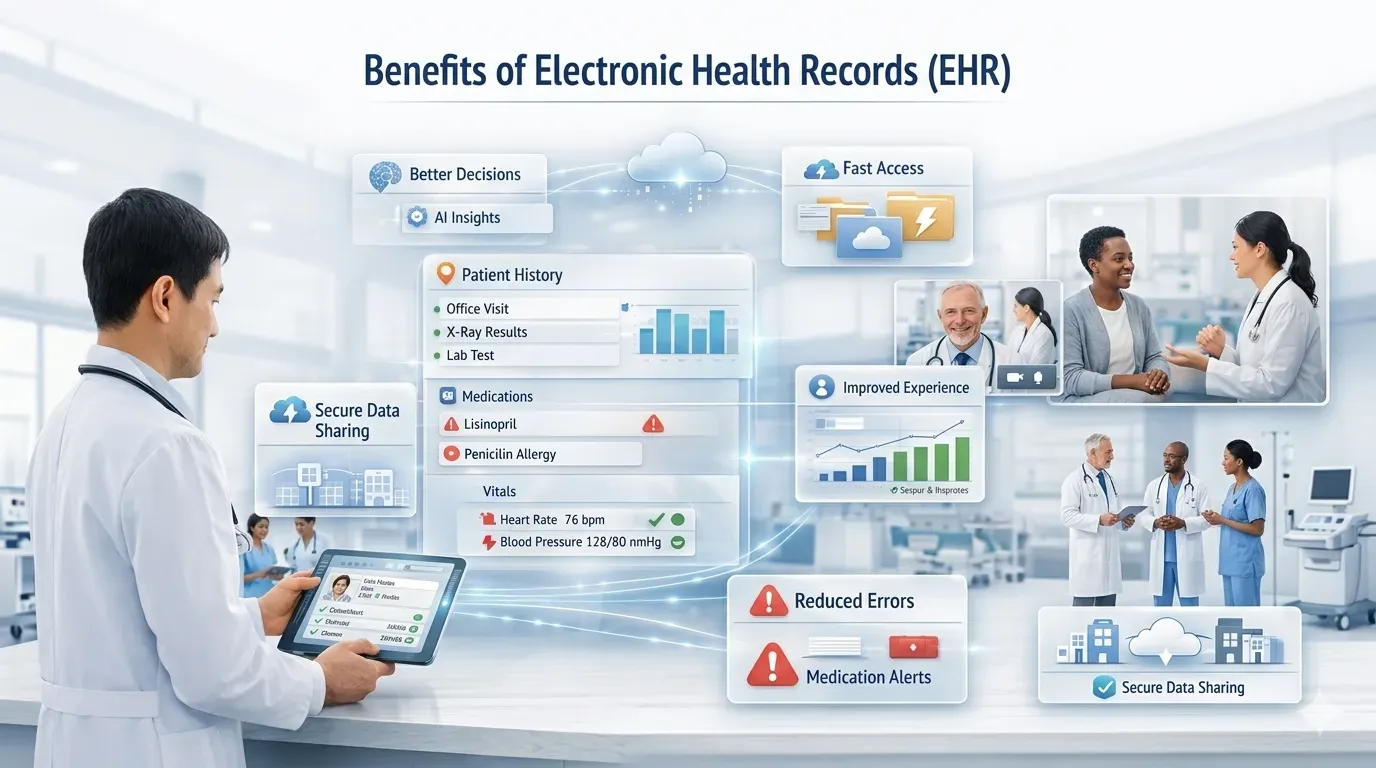
From a practical perspective, digital records save time, reduce errors, and improve the quality of care in ways that paper systems simply cannot match.
Better Healthcare Decisions
When a clinician has access to a patient’s complete history, medications, allergies, past diagnoses, and family history, they make better decisions. They catch contraindications. They avoid unnecessary duplicate tests. They connect symptoms that might otherwise appear unrelated.
Fast Access to Critical Information
In an emergency, speed is everything. A patient brought into an emergency department unconscious cannot describe their allergies or current medications. With an accessible EHR, the emergency team can pull up the complete record within seconds and treat accordingly.
Reduced Medical Errors
Many medical errors stem from incomplete information, such as prescribing a medication a patient is allergic to, duplicating a test that was already done, or missing a diagnosis noted by a previous provider. EHRs dramatically reduce these risks by making the full picture visible to everyone involved in care.
Improved Patient Experience
Patients spend less time filling in the same forms repeatedly at every new clinic. Their information is already there, already accurate, and already shared. The consultation can focus on the patient, not on administrative catch-up.
Cost Efficiency
Duplicate tests, avoidable hospital readmissions, and administrative overhead are among the most significant cost drivers in healthcare. EHRs reduce all three, saving money for providers, insurers, and patients alike.
EHR vs EMR: What Is the Difference?
These two terms are often used interchangeably. They are not the same thing.
Feature | EMR (Electronic Medical Record) | EHR (Electronic Health Record) |
|---|---|---|
Scope | Single practice or clinic | Across multiple providers and organisations |
Sharing | Not easily shared outside the practice | Designed to be shared across the care network |
Portability | Stays within one system | Travels with the patient |
Data included | Clinical notes from one provider | Comprehensive health history from all providers |
Best for | Internal record-keeping | Coordinated, connected patient care |
In simple terms, an EMR is a digital version of the paper chart in one doctor’s office. An EHR is a comprehensive, shareable record that follows the patient across their entire healthcare journey.
Most modern healthcare systems are moving toward full EHR adoption precisely because the connected, portable nature of EHRs delivers far greater benefits than isolated EMR systems.
Security and Privacy in EHR Systems
Health data is among the most sensitive personal information a person has. EHR systems are held to extremely high security standards. Here is how that protection works in practice.
Encryption
All patient data stored in EHR systems is encrypted, meaning it is converted into a coded format that is unreadable without the correct decryption key. Even if an unauthorized person accessed the server, the data itself would be useless to them.
Access Control
Not everyone in a healthcare organisation can see every patient’s record. Role-based access controls ensure that a receptionist sees only scheduling information, a nurse sees clinical notes relevant to their ward, and a specialist sees only what is necessary for the patient’s care.
Every access is logged, creating an audit trail that records who viewed a record, when, and from where.
Privacy Regulations
EHR systems in most countries must comply with strict privacy laws, such as HIPAA in the United States, GDPR in Europe, and equivalent legislation elsewhere. These laws govern how health data is collected, stored, shared, and protected, with significant penalties for breaches.
Patient Rights
In many healthcare systems, patients have the legal right to access their own EHR, request corrections to inaccurate information, and control who can view their data. Understanding these rights puts patients in an active role in managing their own health information.
EHR Combined With Modern Health Technology
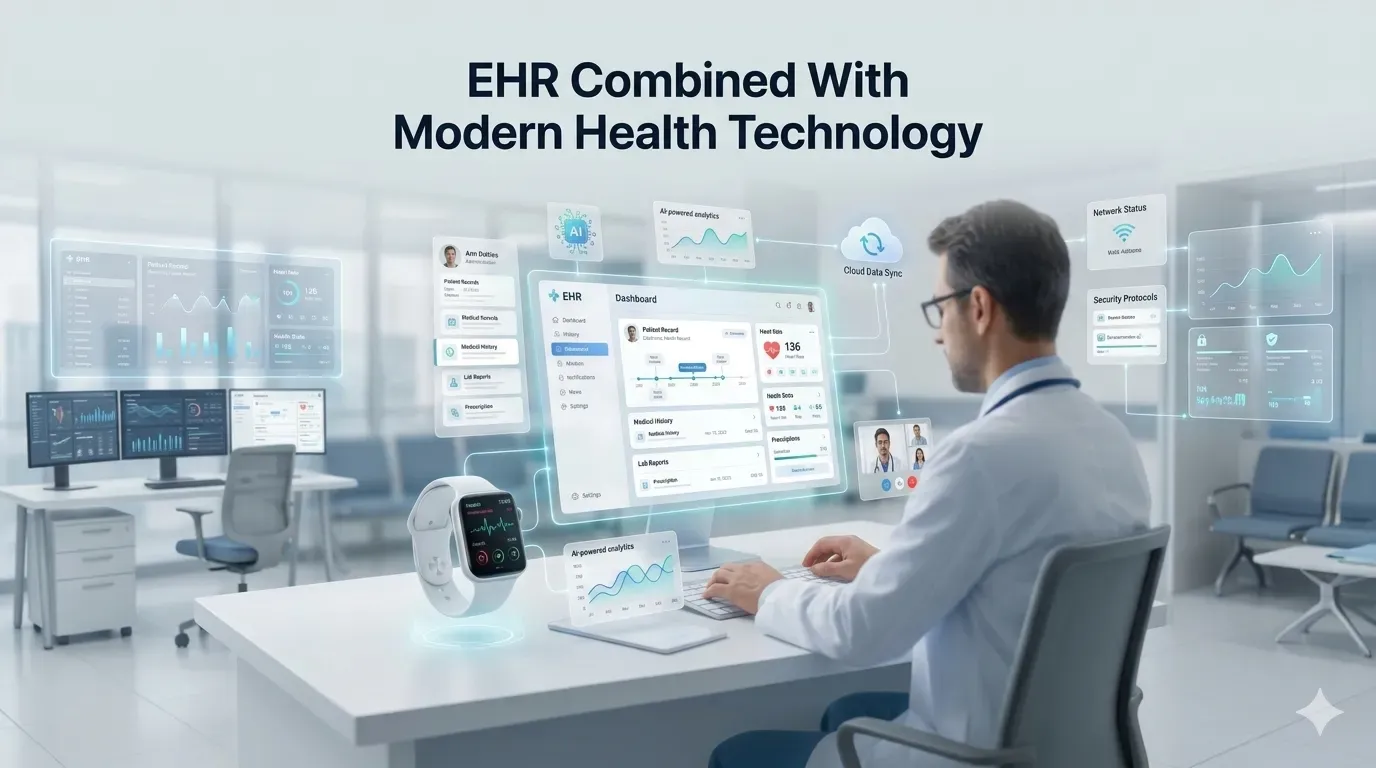
EHR systems become dramatically more powerful when connected to other digital health tools.
Wearable Devices
Smartwatches and health monitors can feed continuous data, such as heart rate, sleep patterns, blood oxygen levels, and activity levels, directly into a patient’s EHR. A cardiologist reviewing your record sees not just what happened during your last appointment, but how your heart has behaved every day for the past three months.
Real-life use case: A patient with atrial fibrillation wears a cardiac monitor. The device detects an irregular rhythm at 2 am on a Tuesday. That data feeds automatically into the EHR. The cardiologist reviews it the next morning and adjusts the patient’s medication before the patient even realises anything happened.
Mobile Health Apps
Patient-facing health apps allow individuals to log symptoms, track medication adherence, record blood pressure readings, and communicate with their care team, all feeding into the central EHR. This turns the patient from a passive recipient of care into an active participant.
Telemedicine
When a telemedicine consultation takes place, the EHR is the foundation. The remote doctor reviews the full patient history before the call, adds notes during the consultation, and updates prescriptions, all in the same system used for in-person care. No information is lost between channels.
Why Do They Matter for Modern Healthcare?
Wearable health devices are transforming modern healthcare by shifting the focus from reactive treatment to proactive prevention. Instead of visiting a doctor only when symptoms appear, individuals can now track their health in real time and identify potential issues early. This continuous monitoring helps in managing chronic conditions, improving fitness levels, and reducing healthcare costs over time. For healthcare providers, access to accurate, real-time patient data enables better diagnosis, more personalised treatment plans, and improved patient outcomes. As technology continues to evolve, wearable devices are becoming an essential tool in building a smarter, more efficient, and patient-centred healthcare system.
Common Mistakes in EHR Implementation and Use
Mistake 1: Poor Data Entry
Incomplete or inaccurate data entry defeats the purpose of an EHR. A record is only useful if the information in it is correct and complete.
Fix: Healthcare organisations should invest in training and establish clear data entry standards. Clinicians should take the time to enter notes accurately, not rush through documentation.
Mistake 2: Ignoring Data Security
Many data breaches happen not through sophisticated hacking, but through weak passwords, unattended login sessions, or staff sharing credentials.
Fix: Enforce strong password policies, require multi-factor authentication, and train all staff on basic data security practices.
Mistake 3: Lack of Staff Training
EHR systems are powerful, but only when staff know how to use them. Poorly trained teams revert to workarounds, miss features, and make avoidable errors.
Fix: Treat EHR training as an ongoing requirement, not a one-time event. Regular refreshers and clear documentation help staff use systems to their full potential.
Mistake 4: Over-Reliance on the System
An EHR is a tool, not a replacement for clinical judgement. A doctor who accepts every automated alert without critical evaluation or who trusts a record without questioning potentially outdated information is not using the system wisely.
Fix: Use EHR data to inform decisions, not make them automatically. Clinical expertise and human judgement remain essential.
Conclusion
The shift from paper to digital health records is not simply a technology upgrade. It is a fundamental improvement in how healthcare works for patients, for clinicians, and for health systems as a whole.
EHRs eliminate information gaps. They surface the complete picture. They connect the dots between a GP, a specialist, a pharmacist, and an emergency team, ensuring that everyone involved in a patient’s care is working from the same, accurate, up-to-date information.
The technology exists. The benefits are proven. The remaining challenge is implementation, getting systems connected, staff trained, and patients informed about their rights and their records.
For anyone navigating the healthcare system, understanding how EHRs work puts you in a stronger position as a patient, a caregiver, or a healthcare professional. Your health history is one of the most important datasets in your life. Digital records make sure it is there when you need it most.
Frequently Asked Questions
Q: What are Electronic Health Records?
Electronic Health Records are digital systems that store a patient’s complete medical history, including diagnoses, medications, test results, allergies, and clinical notes in a secure, accessible format that authorised healthcare providers can view and update in real time.
Q: How do EHR systems work?
EHR systems store patient data on secure servers. When a clinician logs in with authorised credentials, they can access a patient’s complete record, add new information, review test results, and update prescriptions. The record updates instantly and is visible to all authorised providers involved in that patient’s care.
Q: What is the difference between EHR and EMR?
An EMR is a digital record used within a single practice; it does not travel with the patient. An EHR is designed to be shared across multiple providers, hospitals, and healthcare settings, giving a complete and portable picture of a patient’s health history. EHRs are the more comprehensive and clinically valuable of the two.
Q: Are electronic health records safe?
Yes, when properly implemented. EHR systems use encryption, role-based access controls, and detailed audit trails to protect patient data. They must comply with strict privacy legislation in most countries. The greatest risks come from human factors, weak passwords, inadequate training, and poor security practices rather than from the technology itself.
Q: Why are EHRs important in healthcare?
EHRs reduce medical errors, improve care coordination, speed up access to critical information, and give clinicians the complete picture they need to make good decisions. They remove the fragmentation and information gaps that cause harm in paper-based systems, and they put the patient at the centre of a connected, informed care network.
Share this article
Related Articles
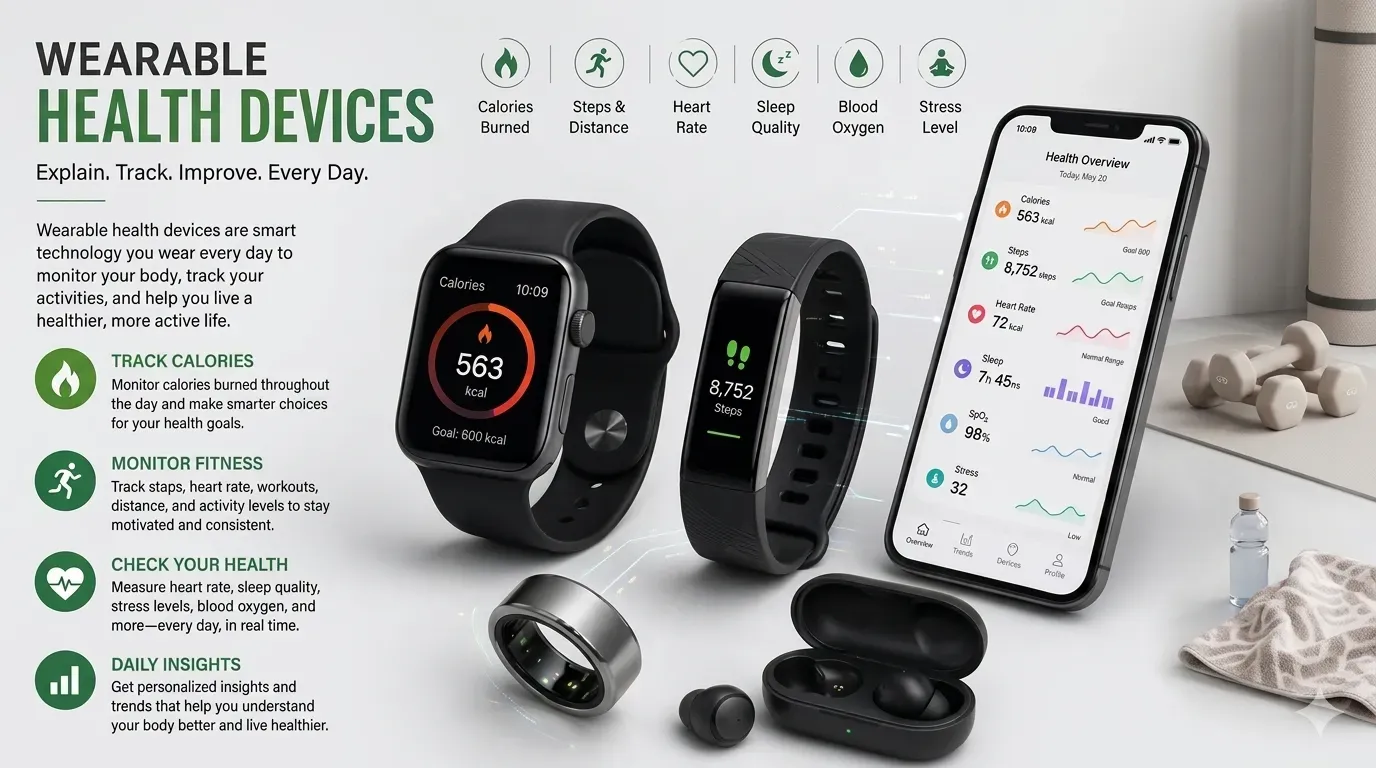
Wearable Health Devices Explained: Track Calories, Fitness, and Your Health Every Day
Discover how wearable health devices help track calories, fitness, sleep, heart rate, and overall wellness. Explore the smart technology changing personal healthcare in 2026.
HealthTech Explained: How Digital Healthcare Tools Are Changing the Way We Live and Heal
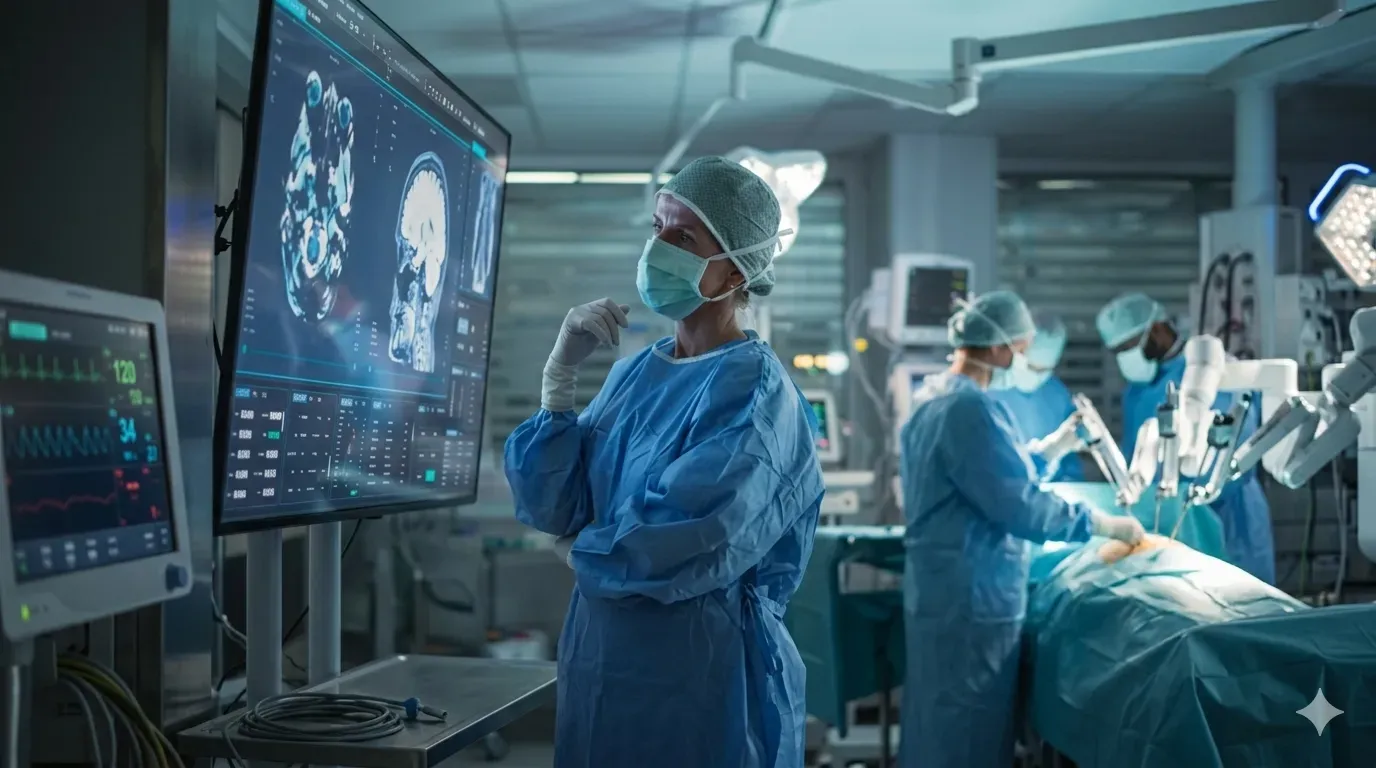
Discover how HealthTech is transforming modern healthcare in 2026. Learn how digital tools, AI, and smart medical technologies are improving diagnosis, treatment, and everyday health management.