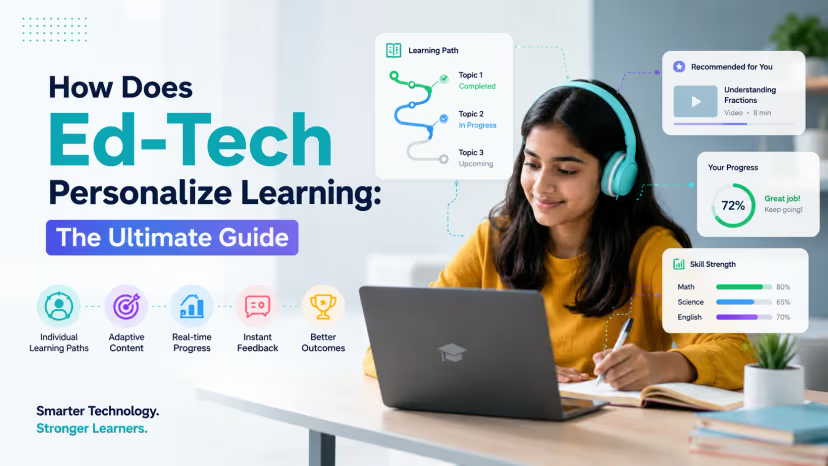
How Does Ed-Tech Personalize Learning: The Ultimate Guide
Discover how EdTech personalizes learning through AI-driven platforms, adaptive learning systems, and smart education tools that create customized learning experiences for every student.
Imagine a classroom of 30 students. Some grasp algebra in five minutes. Others need three sessions and a visual diagram. Most traditional teaching delivers one lesson at one speed to all 30. The result? Faster learners disengage. Slower learners fall behind. Potential goes unrealized on both ends.
This is the gap that educational technology, Ed-tech, was built to close. Modern Ed-tech platforms answer the critical question: How does Ed-tech personalize learning? The answer involves data science, machine learning, behavioral psychology, and curriculum design working in concert.
This guide breaks down every mechanism, tool, and strategy Ed-tech uses to deliver a genuinely tailored learning experience and why this approach consistently outperforms traditional instruction when implemented well.
How Does Ed-Tech Personalize Learning? The Core Mechanisms
Ed-tech personalizes learning through five interconnected mechanisms. Each mechanism feeds data into the next, creating a continuously improving personalization loop.
1. Adaptive Learning Algorithms
Adaptive learning algorithms analyze a student's responses in real time and adjust the difficulty and type of content accordingly. If a student answers three geometry questions correctly in a row, the algorithm advances the student to a harder concept. If the student struggles, the algorithm serves review content or a different explanation format.
Platforms like Khan Academy, Duolingo, and Knewton use adaptive algorithms as the foundation of their personalized curriculum delivery. These algorithms rely on models like Item Response Theory (IRT), which calculates the probability of a correct answer based on item difficulty and learner ability.
2. Real-Time Performance Tracking
Ed-tech platforms track every click, pause, replay, and answer. This behavioral data builds a detailed learner profile that identifies strengths, weaknesses, preferred content formats, and optimal study times. Performance tracking is continuous, updating the learner profile with every interaction, not just at formal assessment points.
3. Mastery-Based Progression
Rather than advancing students by time spent (e.g., one week per chapter), mastery-based systems advance students only when they demonstrate competency. A student who masters fractions in two days moves on. A student who needs two weeks gets two weeks without penalty or stigma.
4. Content Differentiation
The same concept can be taught through video, text, infographic, interactive simulation, and audio. Ed-tech platforms match content format to learner preference and learning history. A student who consistently performs better after watching an explainer video will receive video-first content for new topics.
5. AI-Powered Feedback Loops
Educational AI tools provide immediate, specific feedback rather than generic scores. Instead of "Incorrect, try again," a platform might say: "You correctly applied the formula, but used the wrong unit conversion. Review the conversion table in Module 3." This targeted guidance accelerates skill correction.
Key Educational AI Tools Driving Personalization
Platform | Primary AI Feature | Personalization Mechanism |
|---|---|---|
Khan Academy (Khanmigo) | Khan Academy (Khanmigo) | Adaptive hints, personalized practice recommendations |
Duolingo | Spaced repetition + ML | Custom lesson paths based on error patterns |
Coursera (Coach) | AI course coach | Personalized study plans, deadline nudges |
Carnegie Learning | Cognitive Tutor AI | Real-time mastery tracking per skill node |
Squirrel AI | Deep learning engine | Micro-concept mapping to 10,000+ knowledge points |
These educational AI tools share a common architecture: they collect input data, run it through a prediction model, and adjust the learning path in real time. The sophistication varies from simple branching logic to deep neural networks that model thousands of knowledge relationships simultaneously.
Learning Behavior Analysis: How Platforms Know What You Need
Learning behavior analysis is the data engine behind personalization. Ed-tech platforms collect behavioral signals that most learners never consciously notice:
Time-on-task: How long a student spends on each question or module
Error patterns: Which types of mistakes recur, indicating a conceptual gap, not just a careless error
Engagement signals: Video rewind behavior, quiz retakes, note-taking activity
Session timing: Whether performance drops after 20 minutes (fatigue signal) or peaks in early morning sessions
Hint usage: The frequency of hint requests signals confusion before formal assessment can detect it
These data points feed into a learner model, a real-time digital representation of what the student knows, how the student learns, and what instructional approach will be most effective next.
💡 From Experience In a 2023 pilot with a mid-sized K–12 district using an adaptive math platform, teachers reported that the platform's learning behavior analysis identified struggling students 3–4 weeks earlier than traditional formative assessment, giving educators an actionable intervention window before students fell significantly behind. |
Self-Paced Learning: The Power of Student-Controlled Progress
Self-paced learning is one of the most transformative features Ed-tech enables. Traditional classroom schedules require all students to advance together regardless of individual readiness. Self-paced learning decouples content mastery from calendar time.
Research from the Christensen Institute (2022) found that self-paced learning models in blended environments produced an average of 0.35 standard deviations improvement in learning outcomes compared to traditional pacing, equivalent to roughly 4 months of additional learning.
Self-paced learning works because it operates on the principles of Bloom's Mastery Learning theory: students should master foundational concepts before advancing to dependent concepts. Ed-tech automates the prerequisite gating that human teachers simply cannot manage for 30+ students simultaneously.
How Ed-Tech Implements Self-Paced Learning
Prerequisite mapping: Advanced topics unlock only after mastery of foundational topics
Progress dashboards: Students see exactly where they stand and what to tackle next
Flexible scheduling: Students can pause, rewind, and revisit material without instructor intervention
Pacing alerts: AI flags students who are progressing too slowly or too quickly relative to course targets
Building a Personalized Curriculum: From Data to Delivery
A personalized curriculum is not simply a playlist of content. Ed-tech platforms construct dynamic learning pathways that adapt as the student progresses. The process follows a four-stage cycle:
Diagnostic Assessment: The platform establishes a baseline through an initial assessment or analysis of prior activity.
Path Generation: The AI maps the student's current knowledge state against the target learning objectives and generates an optimal sequence of content.
Delivery & Monitoring: Content is delivered, and real-time performance data continuously updates the learner model.
Path Recalibration: The algorithm recalculates the optimal path at regular intervals, sometimes after every single question answered.
This cycle repeats continuously, meaning the personalized curriculum is never static. A student who suddenly masters a previously weak concept will find the path accelerating immediately, without waiting for a weekly test to unlock new content.
Data & Statistics: The Evidence for Ed-Tech Personalization
Statistic | Statistic |
|---|---|
The global Ed-tech market is projected to reach $404 billion by 2026 | HolonIQ (2023) |
72% of students report higher engagement with personalized learning platforms | EdTech Digest Survey (2023) |
Students in personalized learning environments score 27 percentile points higher on standardized assessments | RAND Corporation Study (2021) |
87% of teachers say Ed-tech tools help them identify at-risk students faster | CoSN Annual Report (2023) |
Note: Statistics marked with named sources reflect published research as of 2023. Readers should verify current figures directly with the cited organizations, as Ed-tech research evolves rapidly.
From Experience: Real-World Case Studies in Ed-Tech Personalization
Case Study 1: Elementary Math Intervention (Grades 3–5)
A Title I elementary school in Georgia deployed an adaptive math platform across 400 students in 2022. Before implementation, 61% of third-graders scored below grade level on state assessments. After one academic year with the platform providing personalized curriculum delivery and learning behavior analysis, 74% of the same cohort scored at or above grade level, a 13-percentage-point gain in 10 months.
The platform's diagnostic engine identified that the majority of students had a specific gap in place value understanding, a foundational gap that was causing cascading failures across multiple math concepts. Teachers had not identified this shared root cause. The AI flagged it within the first two weeks.
💡 From Experience When reviewing multiple Ed-tech implementations, the most common implementation mistake is skipping the diagnostic phase. Platforms that jump directly to content delivery without establishing a baseline produce far weaker personalization. The first two weeks of data collection are disproportionately valuable and resist the urge to skip past them. |
Case Study 2: Corporate Upskilling Program
A Fortune 500 technology company deployed a personalized learning platform for 2,300 software engineers completing a cloud architecture certification program. The self-paced learning model allowed engineers to complete the program in an average of 6.2 weeks compared to the 12-week cohort-based model the company had used previously. Certification pass rates rose from 68% to 89%.
Conclusion
The question of how Ed-tech personalizes learning has a clear, evidence-based answer: through continuous data collection, intelligent adaptive algorithms, and AI-powered delivery systems that adjust every variable of the learning experience to match each student.
Personalized learning is not a futuristic concept. It operates at scale today in K–12 classrooms, university courses, corporate training programs, and self-directed skill development. The platforms doing this work are not experimental; they serve tens of millions of learners globally, and the research supporting their effectiveness continues to grow.
For educators, administrators, and learners evaluating Ed-tech options, the key questions are: Does the platform use genuine adaptive algorithms or simply linear branching? Does it perform learning behavior analysis, or just record scores? Does the personalized curriculum update in real time, or only at the end of a module?
The answers to those questions separate truly personalized Ed-tech from products that merely claim the label.
Frequently Asked Questions
Q: What is a personalized curriculum in Ed-tech?
A personalized curriculum in Ed-tech is a dynamically generated learning path tailored to an individual student's current knowledge level, learning pace, and performance history. Unlike a fixed syllabus, a personalized curriculum updates continuously as the student progresses, ensuring content is always appropriately challenging and sequenced.
Q: How does Ed-tech personalize learning without a human teacher?
Ed-tech personalizes learning through adaptive algorithms and AI-powered feedback systems that replicate key tutoring behaviors, diagnosing gaps, adjusting difficulty, and providing targeted guidance. Human teachers remain valuable for mentorship, motivation, and complex discussion, but the platform handles the data-intensive task of tracking each student's knowledge state in real time.
Q: What is learning behavior analysis?
Learning behavior analysis is the process of collecting and interpreting student interaction data, including response times, error patterns, hint requests, and engagement signals to build a predictive model of the learner's needs. Ed-tech platforms use this analysis to anticipate where a student will struggle before the student experiences failure.
Q: Is self-paced learning effective for all students?
Self-paced learning is highly effective for motivated, independent learners. For students who lack self-regulation skills, Ed-tech platforms implement AI-driven pacing alerts, check-in prompts, and teacher dashboards that provide structure without removing flexibility. Blended models combining self-paced digital learning with scheduled teacher check-ins produce the strongest outcomes across diverse learner populations.
Q: What are the best educational AI tools for personalized learning?
The leading educational AI tools include Khan Academy (with Khanmigo AI tutor), Carnegie Learning for math, Duolingo for language acquisition, Coursera for higher education and professional development, and Squirrel AI for K–12 across subjects. The best tool depends on the subject, learner age, and instructional context. No single platform leads across all categories.
Q: How does Ed-tech personalize learning at scale?
Ed-tech personalizes learning at scale through automation. Algorithms that would require a human tutor hours to analyze process thousands of student data points in milliseconds. This allows a single platform to deliver meaningfully differentiated instruction to millions of students simultaneously, something no human teaching workforce can replicate.
Share this article
Related Articles
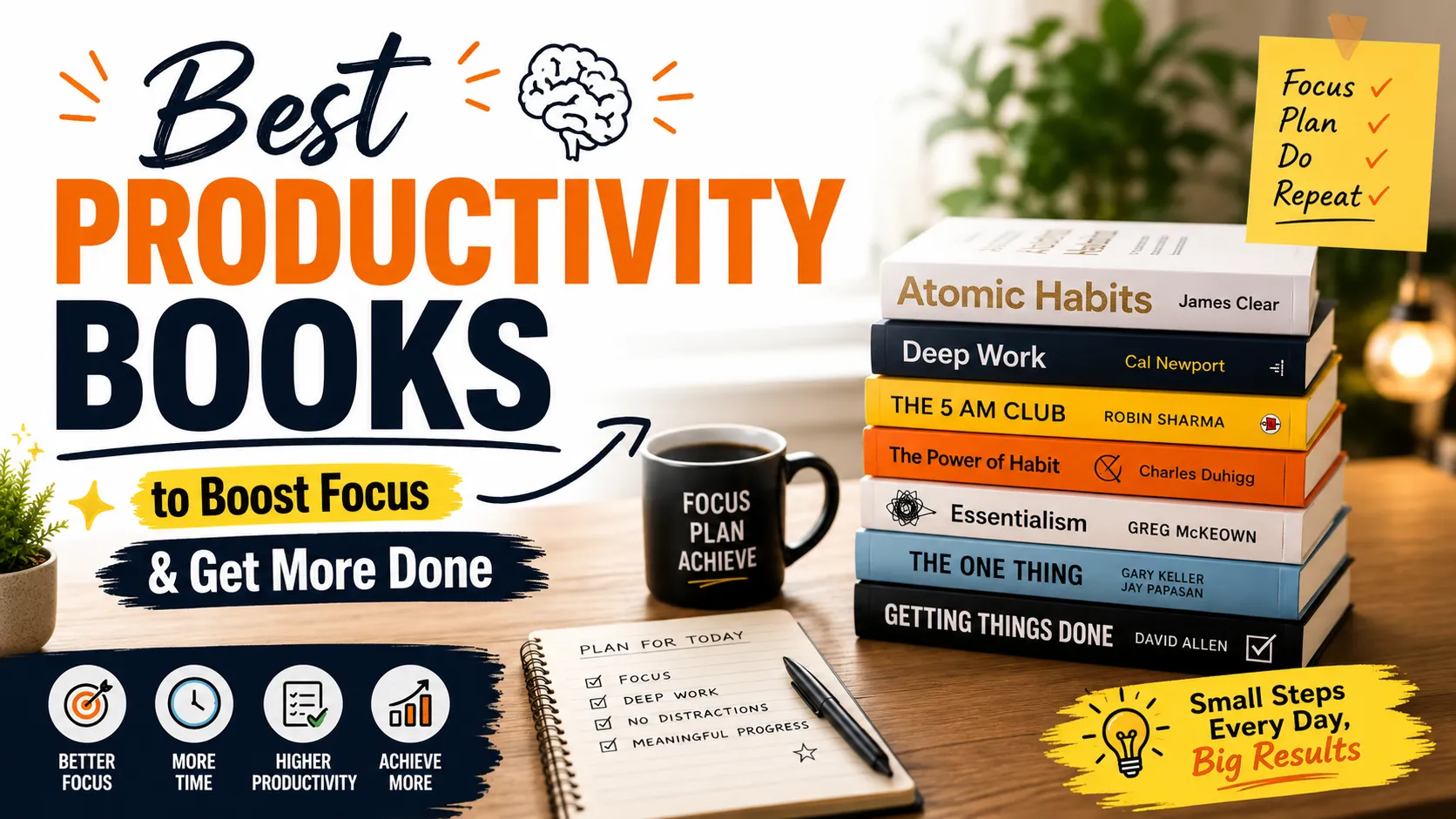
Best Productivity Books to Boost Focus & Get More Done
Struggling to stay focused, beat procrastination, or manage your time? Discover the 10 best productivity books in 2026 that offer proven strategies to build better habits, improve concentration, and help you get more done with less stress.
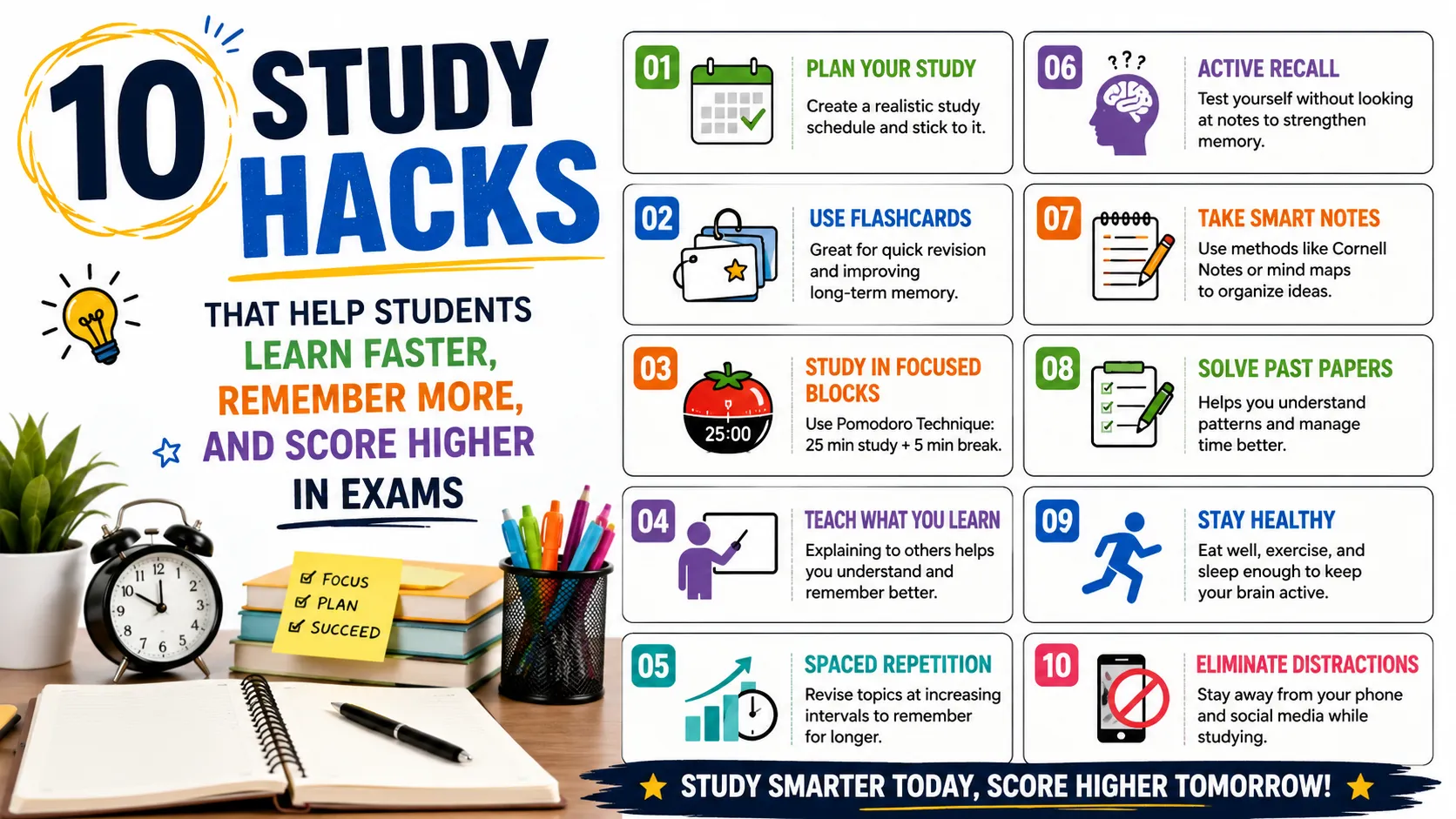
10 Study Hacks That Help Students Learn Faster, Remember More, and Score Higher in 2026
Learn 10 science-backed study hacks that help students study smarter, retain information longer, stay focused, and perform better in exams.

How Ed-Tech Uses Gamification to Boost Learning
Research confirms that gamification works. Students in gamified environments show 14% higher long-term knowledge retention, and gamified online courses achieve 30–40% better completion rates than non-gamified equivalents. Meanwhile, 89% of students say they would spend more time learning if tools felt more like games a number that explains why every major ed-tech platform from Duolingo to Khan Academy has gamification at its core.