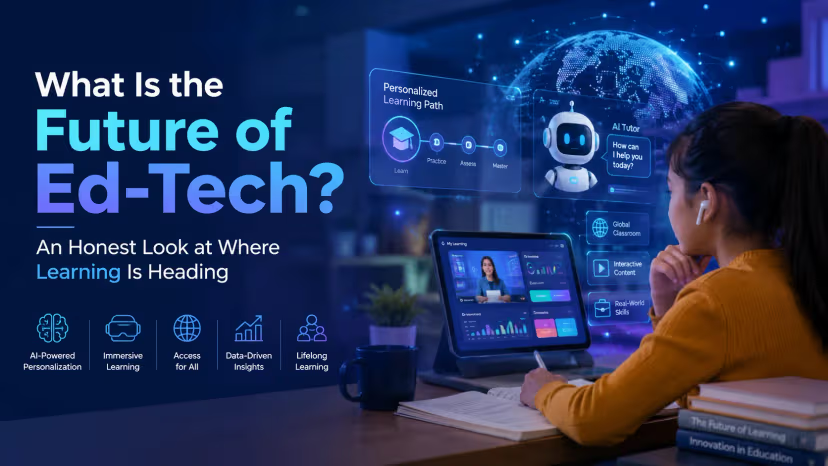
What Is the Future of Ed-Tech? An Honest Look at Where Learning Is Heading
Discover the future of EdTech and how learning is evolving in 2026. Explore AI classrooms, personalized education, and digital tools shaping smarter, more accessible learning for all students.
Why This Shift Is Bigger Than People Realize
Most conversations about education technology focus on tools, a new app here, a smarter LMS there. That framing misses the point. What is actually happening across schools, universities, and corporate training programs right now is a structural change in how learning gets designed, delivered, and measured.
Think about what traditional education assumes: everyone in a room, at the same pace, absorbing the same content. That model worked reasonably well when the alternative was nothing. But learners have always differed in background knowledge, attention styles, motivation, and available time. The old system just couldn't do much about it.
Ed-tech, at its best, is finally addressing that mismatch. AI systems can now identify exactly where a student is struggling and route them toward the right content before frustration turns into dropout. Platforms can deliver a university-level course to a student in rural Pakistan just as effectively as to one in London, given a reliable internet connection. That is a genuinely new capability, and its implications run deep.
This guide breaks down the trends driving that change, the data behind them, and crucially, the real obstacles that enthusiasm often glosses over. No hype. No oversimplified predictions. Just a clear, grounded picture of where digital learning is going and what it means for educators, learners, and institutions.
The Six Trends Actually Reshaping Education Right Now
Trends in ed-tech get listed constantly. Many are overhyped. The six below have genuine traction, measurable adoption, published outcomes, and growing infrastructure behind them.
1. AI-Powered Tutoring and Content Curation
Artificial intelligence has moved from novelty to infrastructure in education. Systems like Khan Academy's Khanmigo, Carnegie Learning's MATHia, and Duolingo's adaptive engine now serve millions of learners daily. These platforms do something genuinely valuable: they analyze how a specific student responds to specific content and adjust accordingly in real time, without a teacher needing to intervene manually.
The result is not a replacement for human instruction. It is a way of making personalized feedback scalable. A classroom teacher with thirty students cannot give each one a customized learning path every lesson. An AI system can and increasingly does.
2. Immersive Learning VR, AR, and Simulations
Virtual and augmented reality have struggled to find a mainstream foothold in consumer markets. In education, however, the use case is compelling enough to drive real adoption. Medical training programs use VR simulations to let students practice procedures before touching a patient. Corporate safety training uses immersive scenarios to build decision-making under pressure. Language learning platforms use AR to overlay vocabulary in real environments.
The hardware cost has dropped significantly since 2021. Meta Quest headsets are now affordable enough for institutional bulk purchasing. Several school districts across the US and UK have piloted VR-integrated curricula with measurable engagement improvements over traditional instruction.
3. Microlearning Shorter, Sharper, More Retained
Attention is a resource. Microlearning treats it that way. Instead of 90-minute lectures, microlearning delivers content in focused 5–10-minute modules designed around a single concept or skill. Research from the Journal of Applied Psychology found that learning broken into small segments improved transfer of knowledge by 17% compared to longer, massed formats.
Corporate training has adopted this approach faster than formal education. Platforms like LinkedIn Learning, Axonify, and Grovo built their entire product architecture around microlearning principles, and their retention data shows why.
4. Learning Analytics Turning Data Into Action
Every interaction a student has with a digital learning platform generates data. How long do they spend on a concept? How many attempts does it take? What time of day do they tend to disengage? Learning analytics platforms aggregate that data and surface patterns that would be invisible to a human teacher reviewing a paper gradebook.
Used well, analytics transform how institutions identify at-risk students, design curriculum, and allocate support resources. The keyword is 'used well.' Data without a clear decision framework attached to it is just noise.
5. Gamification Motivation as a Design Problem
Gamification in education is often dismissed as gimmicky. That reaction misunderstands what gamification actually is. It is not about making learning into a video game. It is about applying the design principles that make games engaging, clear goals, immediate feedback, visible progress, and meaningful challenge to educational contexts where those elements are often absent.
Duolingo is the most studied example. Its streak system, XP points, and leaderboards have been shown to significantly increase daily engagement compared to traditional language learning approaches. The lesson is not 'add points to your course.' It is 'design for motivation, not just content coverage.'
6. Lifelong and Workforce Learning
The fastest-growing segment in ed-tech is not K–12 or higher education. It is the space between formal schooling and retirement, the continuous learning that a fast-changing job market now demands from nearly every professional. Platforms like Coursera for Business, Degreed, and Pluralsight serve companies that need to upskill large workforces quickly.
According to the World Economic Forum's Future of Jobs Report, 44% of workers' core skills are expected to shift by 2027. Ed-tech is not optional infrastructure for that transition. It is essential.
AI in the Classroom, Real Benefits, Real Limits
It is worth being specific about what AI actually does in educational settings, because the public conversation often conflates several different things.
What AI Does Well in Education
Personalized content routing: AI identifies gaps and adjusts the sequence and difficulty of material for each learner without waiting for a test.
Automated feedback on writing: NLP models can evaluate argument structure, coherence, and factual accuracy, providing formative feedback in seconds rather than days.
Early warning systems: Behavioral data login frequency, time-on-task, and assessment patterns allow AI to flag students at risk of dropping out weeks before a human advisor would notice.
Administrative reduction: Grading, scheduling, attendance, and report generation are time sinks that AI handles with high accuracy, freeing educators for higher-value work.
Where AI Falls Short
AI cannot mentor. It cannot read the room. It cannot notice that a student is distracted because something is happening at home, not because the content is too hard. The relational, emotional, and motivational dimensions of teaching remain firmly human territory, and good ed-tech design acknowledges that rather than pretending otherwise.
From the Field, AI Early Warning in Practice A regional university network across three campuses in Southeast Asia deployed an AI-powered early warning system in 2023. Within the first semester, the system flagged 847 students as high dropout risk identified within the first four weeks of the term. Academic advisors reached out to each student individually. By semester's end, 71% of those flagged had stayed enrolled and passed their courses. The platform did not keep those students. The advisors did. The AI just made sure the advisors knew who to call. |
Adaptive Learning: The Technology Behind Personalized Education
Adaptive learning is the engine underneath much of what makes modern ed-tech meaningfully different from putting a textbook online. The basic idea is simple: the platform adjusts what it shows a learner based on how that learner is actually performing, not on a fixed curriculum sequence.
In practice, this means two students can start the same course and have almost entirely different experiences. One who already understands foundational concepts moves faster. One who is struggling with prerequisites gets routed back to fill those gaps before continuing. Neither wastes time reviewing what they already know. Neither hits a wall they are not ready for.
Why This Matters More Than It Sounds
Traditional e-learning platforms put a course online. Adaptive platforms build a system that learns about the learner. That distinction sounds minor until you look at completion rate data. Standard MOOCs, massive open online courses, average completion rates below 10%. Well-designed adaptive platforms in similar subject areas consistently achieve 40–65% completion rates. The difference is not the content. It is whether the platform responds to the individual or ignores them.
Adaptive Learning in Action
Prerequisite detection: Identifies specific knowledge gaps and addresses them before proceeding, not just flagging that a student is struggling, but diagnosing why.
Spaced repetition: Resurfaces material at optimized intervals based on demonstrated retention, dramatically improving long-term recall.
Multimodal content delivery: Switches between video, text, interactive exercises, and worked examples based on which format a particular learner responds to best.
Mastery-based progression: Students advance when they demonstrate genuine understanding, not simply when the calendar moves to the next week.
Smart Classrooms and Hybrid Learning Models
The physical classroom is not disappearing. But it is changing in ways that would be unrecognizable to a teacher from twenty years ago. Smart classrooms integrate real-time data, connected devices, and collaborative tools into the physical learning environment while hybrid models extend that environment beyond the building entirely.
What Defines a Smart Classroom
Interactive displays connected to cloud content libraries that update in real time
AI-assisted engagement monitoring cameras or sensors that detect when students disengage
Polling and formative assessment tools that give teachers live data during instruction
Seamless LMS integration so that in-class work and digital assignments exist in one ecosystem
The Hybrid Model Has Become the Default in Higher Education
Post-pandemic, universities did not simply return to in-person instruction. They built hybrid models blending synchronous in-person sessions with asynchronous digital learning and discovered that many students preferred the flexibility. According to Educause's 2024 ECAR Study, over 60% of US higher education institutions now operate hybrid-first learning environments as their standard model.
The challenge hybrid learning creates is equity: ensuring that students attending remotely get an equally engaging experience as those in the room. The institutions solving this problem well are investing in production-quality classroom setups, asynchronous participation tools, and instructor training in hybrid pedagogy, not just video conferencing licenses.
Numbers Worth Knowing, Ed-Tech Data & Statistics
Good decisions about education technology require solid data. The figures below are drawn from published institutional reports and market research cited, so you can verify them directly.
Data Point | Figure / Source |
|---|---|
Global ed-tech market size (2024) | $220 billion, HolonIQ Global EdTech Market Report, 2024 |
Projected market size by 2030 | $400+ billion (CAGR ~16.5%) |
Learners enrolled in online courses globally | 220 million+ UNESCO Digital Learning Report, 2024 |
AI-in-education market (2024 → 2030) | $4.8B growing to $30.7B MarketsandMarkets |
Standard MOOC completion rate | Under 10% MIT Research on MOOC completion, 2023 |
Adaptive platform completion rate (avg.) | 40–65% Carnegie Learning internal outcomes data |
Higher ed institutions using a hybrid-first model | 60%+ Educause ECAR Study, 2024 |
Workforce skills expected to shift by 2027 | 44% of core skills, WEF Future of Jobs Report, 2023 |
Employers recognizing online credentials | 72% LinkedIn Workplace Learning Report, 2024 |
K–12 districts using at least one ed-tech platform (US) | 89% CoSN Annual Survey, 2024 |
Note: Institutional use of these figures should verify against primary sources, as market projections carry inherent uncertainty.
A Case Study That Changed How We Think About Digital Learning
Closing the Dropout Gap: One Platform's Adaptive Experiment
In early 2023, an online learning platform serving roughly 450,000 registered learners across Sub-Saharan Africa ran into a familiar problem: its advanced mathematics courses had a 34% completion rate. The content was solid. The instructors were credentialed. The pricing was accessible. And yet two-thirds of students who enrolled never finished.
The platform's data team dug into the dropout patterns and found something specific. Sixty-eight percent of students who abandoned the course did so within the first two modules, not because those modules were the hardest, but because they assumed prerequisite knowledge in fractions and basic algebra that many students simply did not have. Students were not failing the course. They were arriving unprepared for it.
The team built a short diagnostic assessment at enrollment, consisting of eight questions, about twelve minutes. Learners who showed prerequisite gaps were routed automatically into a four-week foundation module before starting the main course. No stigma, no separate enrollment process, no manual intervention required.
Eight months after launch, completion rates had risen to 61%. That is a 79% relative improvement from one structural change that cost almost nothing to implement once the diagnostic was built. The lesson here matters beyond the specific numbers: the biggest gains in digital learning often come not from adding sophisticated technology, but from understanding precisely why learners fail and designing a direct response to that specific failure.
The Problems Nobody Talks About Enough
Ed-tech journalism is largely bullish. Funding announcements, product launches, and success stories dominate the coverage. The harder conversations about what is not working tend to get less attention. They deserve more.
The Digital Divide Is Not Closing Fast Enough
Approximately 2.9 billion people worldwide still lack reliable internet access, according to ITU data from 2024. Every conversation about AI-powered personalized learning, adaptive platforms, and smart classrooms is a conversation about technology that remains inaccessible to roughly a third of the world's population. This is not a peripheral issue. It is the central equity problem of the ed-tech era, and the industry's record on addressing it is mixed at best.
Most Ed-Tech Implementations Fail Because of Training, Not Technology
Studies of ed-tech adoption consistently point to the same finding: technology deployed without adequate teacher training and ongoing instructional support produces minimal impact. The hardware sits unused. The platform goes unassigned. The investment is wasted. This is not a story about bad products. It is a story about institutions underestimating what behavioral change requires.
Data Privacy in Education Is Under-Regulated
AI-powered learning platforms collect enormous quantities of student data, behavioral patterns, performance trajectories, and psychological profiles inferred from engagement signals. The regulatory frameworks governing that data, particularly for minors, remain fragmented and insufficient in most jurisdictions. The ed-tech industry needs stronger governance here, not just voluntary commitments.
Online Credentials Still Face a Credibility Problem
Despite 72% of employers recognizing online credentials in surveys, hiring practices in many sectors still disadvantage candidates without traditional institutional degrees. Stackable credentials, industry-backed certifications, and outcomes-based accreditation models are moving in the right direction, but slowly. Until hiring systems genuinely reflect the value of quality online learning, learners will continue to receive mixed signals about how much their digital education is worth.
Conclousion
The future of education technology is not a fixed destination. It is a set of capabilities, personalization, accessibility, real-time feedback, and data-informed design that are expanding faster than institutions have historically adapted. The gap between what the technology can do and what most schools and universities are actually doing with it remains substantial.
That gap is where the work is. Not in building more sophisticated AI. Not in launching another platform. In training educators to use the tools they already have. In designing learning experiences that actually respond to how students learn, rather than how it is convenient to teach them. In building governance frameworks that protect learner data and ensure algorithmic fairness. In extending connectivity to the 2.9 billion people for whom 'digital learning' is still a theoretical concept.
Technology is not the bottleneck. The will to use it thoughtfully is. For educators, institutions, and ed-tech builders reading this: the opportunity in front of you is significant, and the responsibility attached to it is equally so.
Frequently Asked Questions
Q: What is the future of ed-tech in simple terms?
Learning is becoming more personalized, more flexible, and more data-driven. AI tutors adapt to each student's pace. Classrooms blend physical and digital. And education no longer stops at graduation; it continues throughout a career. The core shift is from one-size-fits-all instruction to systems that respond to the individual learner.
Q: Will AI replace teachers?
No, and this question matters less than the question it distracts from. AI will change what teachers spend their time on. Routine assessment, content delivery to fixed sequences, and administrative tasks are becoming automatable. What remains irreplaceably human: mentorship, relational trust, motivation, and the judgment calls that require understanding a whole person, not just a performance dataset.
Q: How effective is online education compared to traditional classroom learning?
When designed well, online education matches or exceeds traditional instruction on measurable outcomes. The key variables are instructional design quality, availability of learner support, and how actively the platform engages students rather than just delivering content. Format alone, online vs. in-person, is not the determining factor. Design quality is.
Q: What are the best ed-tech platforms right now?
The best platform depends on the learner's age, subject, and goal. For K–12 math and reading: Khan Academy and IXL Learning. For higher education and professional certificates: Coursera and edX. For language learning: Duolingo and Babbel. For corporate upskilling: LinkedIn Learning, Degreed, and Coursera for Business. For K–12 classroom management: Google Classroom and Canvas.
Q: What skills do ed-tech professionals need in 2025 and beyond?
Instructional design remains foundational. Beyond that: AI literacy (not necessarily coding, but understanding what AI systems can and cannot do), learning analytics interpretation, UX research skills for educational contexts, and strong communication across technical and non-technical teams. Empathy for diverse learner populations is not a soft skill; it is a professional requirement.
Q: Is the ed-tech market growing?
Yes, significantly. The global education technology market was valued at approximately $220 billion in 2024 and is projected to exceed $400 billion by 2030, driven by AI adoption, mobile-first platform growth, and expanding demand for workforce learning and corporate training solutions.
Share this article
Related Articles
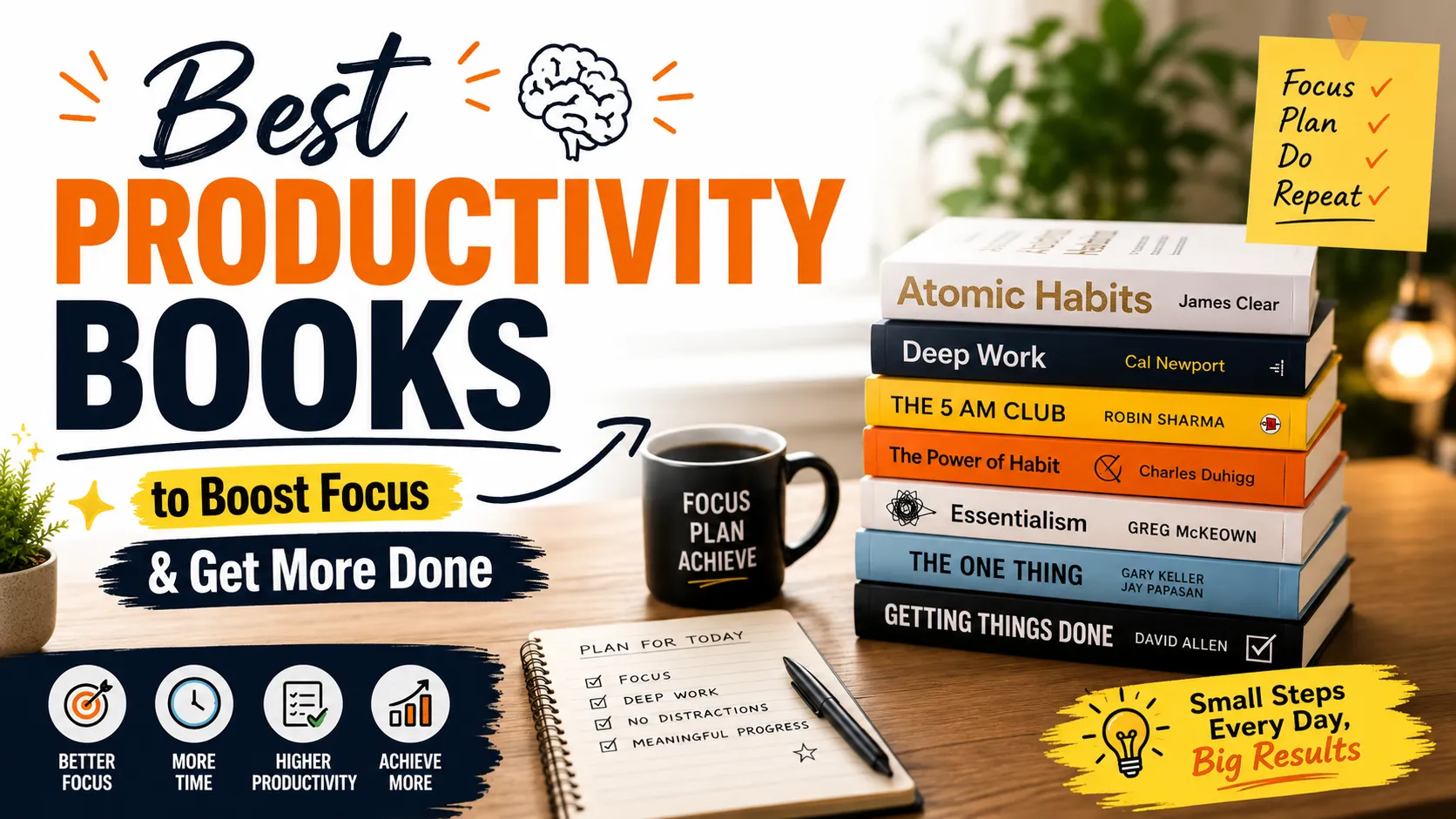
Best Productivity Books to Boost Focus & Get More Done
Struggling to stay focused, beat procrastination, or manage your time? Discover the 10 best productivity books in 2026 that offer proven strategies to build better habits, improve concentration, and help you get more done with less stress.
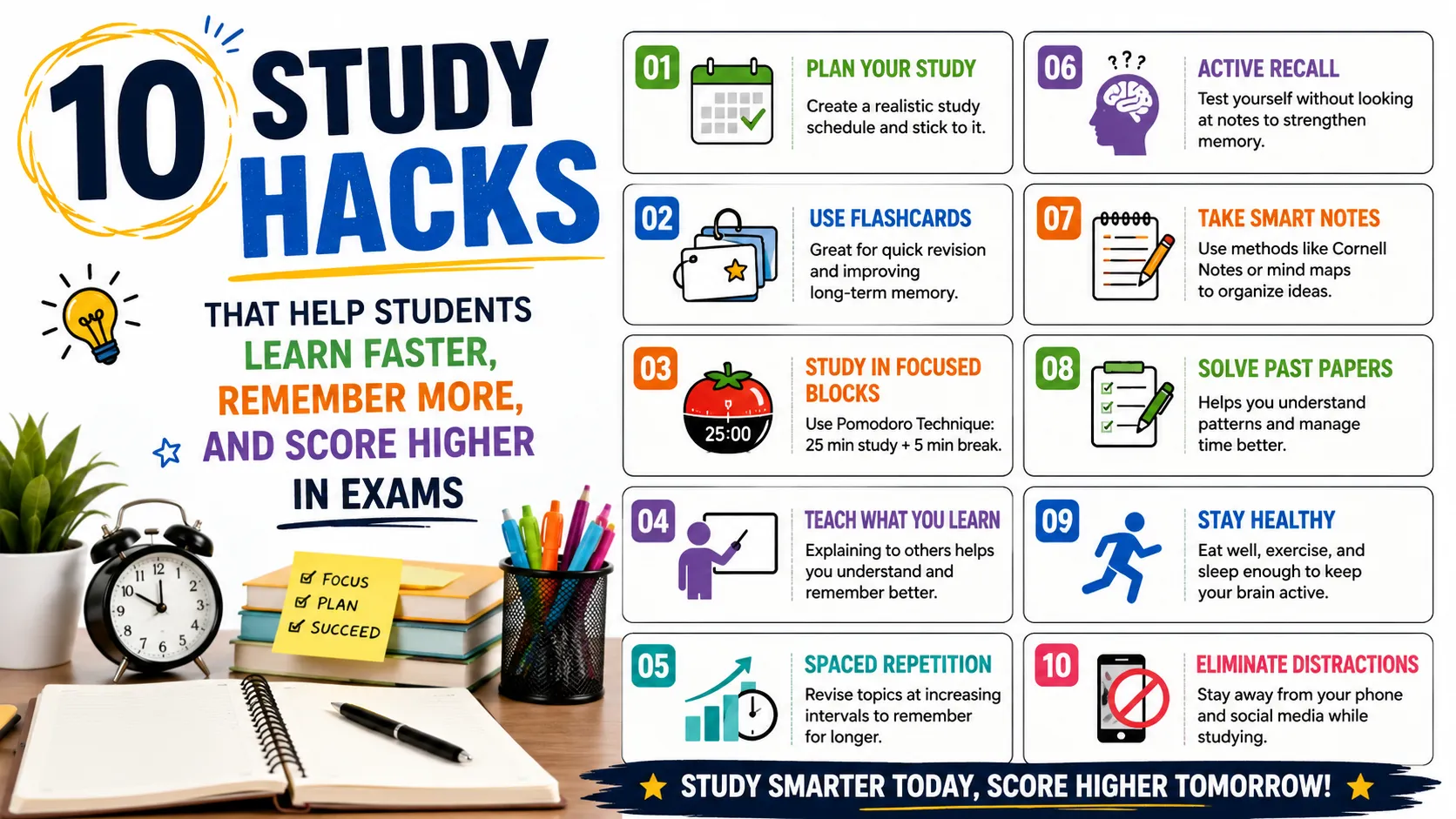
10 Study Hacks That Help Students Learn Faster, Remember More, and Score Higher in 2026
Learn 10 science-backed study hacks that help students study smarter, retain information longer, stay focused, and perform better in exams.

How Ed-Tech Uses Gamification to Boost Learning
Research confirms that gamification works. Students in gamified environments show 14% higher long-term knowledge retention, and gamified online courses achieve 30–40% better completion rates than non-gamified equivalents. Meanwhile, 89% of students say they would spend more time learning if tools felt more like games a number that explains why every major ed-tech platform from Duolingo to Khan Academy has gamification at its core.